


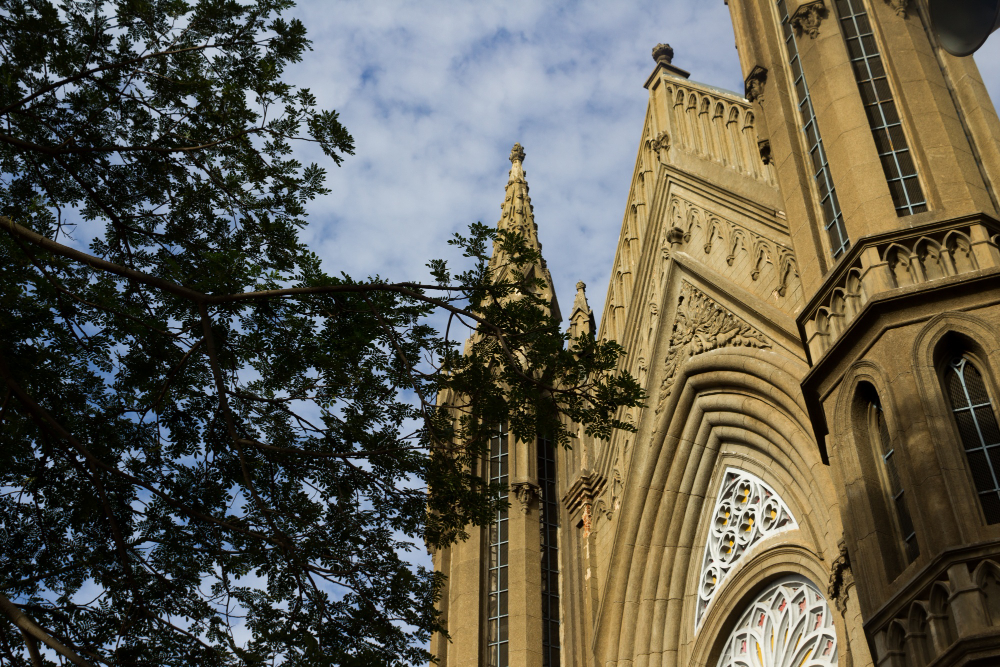
The confluence of journalism, protest, and religion has a distinctively American quality. The questions become louder than the choir when all three come together inside the stone walls of a church service.
Don Lemon, a former CNN anchor, well-known public figure, and recently freelance journalist, was at the center of a protest that was part media firestorm, part immigration statement, and part spiritual disruption at Cities Church in downtown St. Paul on a snowy January Sunday.
| Detail | Information |
|---|---|
| Name | Don Lemon |
| Occupation | Journalist, former CNN anchor |
| Incident | Protest at Cities Church in Minneapolis–St. Paul (January 2026) |
| Legal Outcome | Judge declined to approve federal charges against him |
| Main Allegation | Disrupting a service during an anti-ICE protest |
| Lemon’s Statement | Attended as journalist, not protestor |
| Co-Arrestees | Nekima Levy Armstrong, Chauntyll Allen, William Kelly |
| Source | https://www.politico.com/news/2026/01/22/don-lemon |
A complaint had been prepared by the Department of Justice. Lemon and three local activists were accused of purposefully disturbing a religious event during an unauthorized protest. The demonstration was singled out. Church officials had invited Immigration and Customs Enforcement (ICE) to address the congregation about border policy. Nekima Levy Armstrong, a well-known community organizer, was among the activists who had different ideas.
They came in with cameras, chants, and signs. Don Lemon came in carrying a microphone.
Apparently, though, even that was sufficient.
Within minutes, Lemon and other participants were taken into custody by the local police. According to the DOJ, the charges were based on Title 18, Section 248 of the U.S. Code, which was first enacted to stop protesters from obstructing access to places of worship or abortion clinics. This was an uncommon, if not unprecedented, use of it.
Lemon’s defense was very clear: he wasn’t there to cause trouble or interfere. He was doing a report.
He calmly told a group of reporters outside the courthouse, “I was documenting.” “Just nothing more.”
That might have been the end of it, but in 2026, subtlety is rarely the last word.
Rather, the event took off. Lemon was accused by conservative media outlets of passing off activism as journalism. Press freedom would be chilled, according to progressive commentators. The event was turned into a case study, and it felt remarkably similar to earlier discussions concerning the definition of “the press” in the era of decentralized media.
The public was already divided when the DOJ’s complaint was examined by a federal magistrate. The judge, however, wasn’t.
The magistrate refused to press the charges in a decision that was noticeably restrained but firm. The argument had nothing to do with ICE, Lemon’s notoriety, or the protesters’ objectives. The criterion was straightforward: there was not enough proof that Lemon took part in the protest or purposefully interrupted the service.
Tensions were remarkably reduced, at least temporarily, by that clarity.
However, the co-arrestees continue to be under legal scrutiny. According to Armstrong and Allen, the demonstration was lawful, nonviolent, and protected by the constitution. Although Lemon has stated support for their “democratic right to nonviolent protest,” his legal team has not confirmed whether he will testify on their behalf.
The entire incident was seen by some as yet another instance of journalistic overreach. Others thought Lemon had been criminalized for merely carrying out his duties—using a camera, in a church, during a demonstration.
That evening, I found myself watching the video again in a silent living room with only the distant siren of a snowplow outside and the sound of ice clattering in my glass. The emotional weight of it was hard to ignore—how quickly a microphone becomes evidence, how quickly a church becomes a courtroom.
This story is about more than just Don Lemon in many respects. It has to do with where we draw the line between participation and journalism, especially in high-stakes public discourse.
Throughout history, churches have been places of resistance. Their pulpits have frequently echoed with more than just scripture, from antiwar sermons to civil rights movements. Cities Church was not unfamiliar with political invitations, but they also did not anticipate protesters. The decision to host ICE on a Sunday morning was intentional. The demonstration was a reaction. And whether neutral or not, Lemon’s presence made both more difficult.
From a legal perspective, this might be a clear-cut case. However, it is much more complex when viewed through the prism of public accountability.
Did Don Lemon receive the same treatment as any other citizen? Was it excessive to arrest him? Above all, what precedent does this set for independent journalists?
The emergence of solo reporting in recent years, particularly after 2020, has altered the nature of journalism. More journalists are working outside of traditional media by partnering with donors, nonprofits, or even grassroots collectives. They are extremely adaptable because of their independence, but it also leaves them vulnerable to new threats.
Lemon will be alright because of his platform and legal resources. However, for every Lemon, there are dozens of lesser-known reporters who might have been subject to fines, jail time, or even physical harm in a comparable circumstance.
The DOJ’s decision to drop the prosecution in this case is instructive. It implies that even federal agencies are now exercising greater caution when dealing with press-related cases, particularly when there is scant evidence and intense public scrutiny.
In the future, this case might serve as a warning to both protestors and the media. The landscape is changing, but the rights to assemble, report, and speak are still protected. sharply.
This incident may be forgotten in the long list of stories that Don Lemon has covered or been involved in. However, it was a unique opportunity for the journalism community to understand the dangers of simultaneously being present, watchful, and accountable.
And in a time when boundaries are easily blurred, that clarity is crucial for democracy as well as the law.