


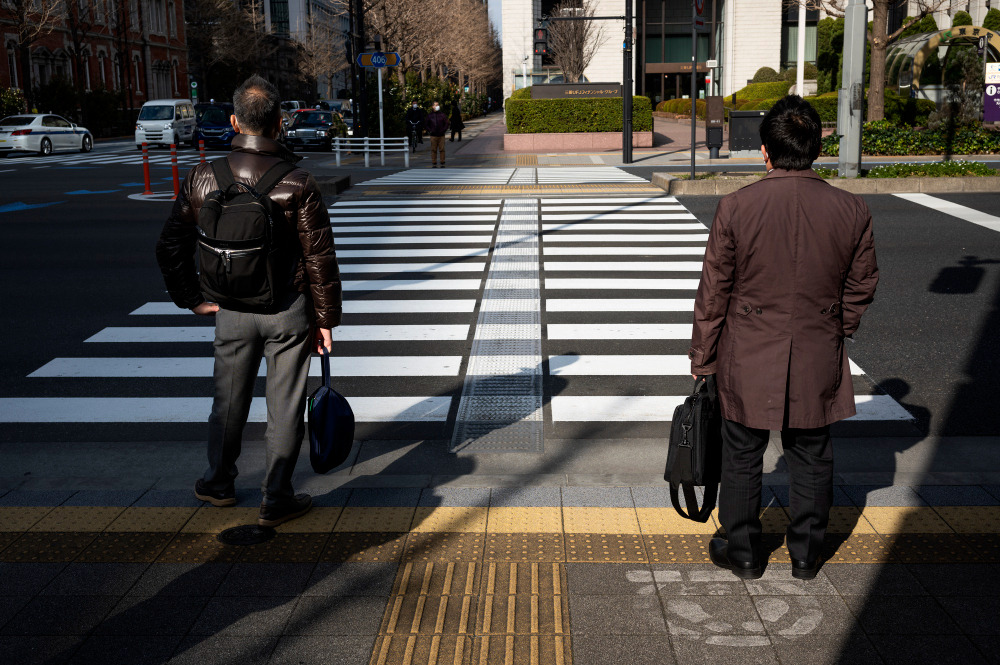
These days, Union Street has a certain quiet that you only become aware of after removing your earbuds or leaving the never-ending hum of a car’s interior. Not that traffic has completely disappeared. The absence of the typical urban noise—the abrupt horns, the high-pitched beeping of crosswalks, and the impatient revving—is striking. Rather, there is quiet—and a change within that quiet.
The decision to install silent crosswalks in Aberdeen started out small. Space was reallocated as the city’s priorities changed due to pandemic-related distancing measures. In an effort to let people, not signs or machines, set the tone, street signage was purposefully softened or removed.
| Aspect | Detail |
|---|---|
| Initiative | Silent Crosswalks and Traffic-Calming Measures |
| Location | Aberdeen City Centre (notably Union Street, Schoolhill, Upperkirkgate) |
| Started | Mid-2020 as part of COVID-era public mobility reconfiguration |
| Key Objective | Prioritize pedestrian safety and shared road responsibility |
| Funding Source | £1.76 million grant from Scottish Government’s “Spaces for People” scheme |
| Public Response | Mixed: praised for calmness, criticized for confusion due to lack of signage |
| Core Benefits | Significantly reduced noise, safer crossings, more engaged driving and walking culture |
| Ongoing Challenge | Enforcement inconsistency and signage clarity in high-traffic areas |
The outcome is more than just beautiful. It has to do with behavior.
Both pedestrians and drivers are asked to pay more attention when there are no auditory cues present. You no longer depend on a countdown beep or a green man flashing. You look. You hold off. The car eases forward while you bargain in silence. Even though it is only temporary, this shared pause restores the social contract that automation had weakened.
The fact that it asks us to act without being instructed makes it especially inventive.
However, not everything has gone as planned, as is the case with any systemic change. Particularly in zones like Schoolhill, some drivers still speed through the recently designated pedestrian-prioritized areas. Others, perplexed by the lack of conventional signage, are still unsure if they should be there at all. Some have even expressed annoyance at the ambiguity, which is remarkably understandable in a society where alerts and regulations are the norm.
Something more positive is developing in spite of these blunders. I recently saw a cyclist slow to a near stop for a group of students who were hesitating at the curb’s edge while walking from Union Terrace to Broad Street. One of them gave a wave. The rider gave a nod. Even though it was a brief conversation, it felt significant.
I couldn’t help but wonder how frequently we avoid these situations in louder cities.
These silent crosswalks encourage people to move with purpose rather than momentum by acting as virtual friction points. When the streets are crowded with people during the busiest shopping hours, the effect is especially advantageous. The atmosphere feels more welcoming, even a little gracious, when harsh noises don’t take over.
The city has effectively returned decision-making authority to its residents by eliminating auditory cues. It’s a daring move. Particularly when you take into account how much of contemporary mobility is controlled by automation, such as satnav voices and traffic lights. This initiative is predicated on the idea that people can observe, evaluate, and adapt without constant direction.
Crucially, this isn’t about enforcing strict laws to force change. The goal is to establish a rhythm that encourages everyone to behave better. But there have been times when that rhythm has been incongruous. Some drivers have completely misunderstood the zones or disregarded the new regulations. Although they are not uncommon, those occurrences are still anomalies. Most appear to adjust—slowly but voluntarily.
Minor traffic incidents at these crossings have significantly decreased since the silent zones were implemented. It’s more than just a safety victory. It indicates a change in behavior.
Silence can be mistaken for absence. However, in Aberdeen, silence has evolved into a communication tool that encourages people to slow down, pay attention, and engage. The program has been especially successful in raising drivers’ awareness of their speed. Some claim that they now approach crossings and corners with more caution, particularly in areas where bollards have been installed or curbs have been rearranged.
The lack of noise does not imply a lack of control. It’s just a different kind of control, one that emphasizes mutual engagement over command.
There has been some tension during this change. Enforcement is still not uniform. Some drivers are still unsure of what to expect, particularly those who are not familiar with the city’s traffic changes. Some busy intersections still don’t have the visibility needed to direct newcomers. It is a design issue that could be resolved without detracting from the main goal.
Still, there is silence.
Additionally, that quiet has created unanticipated opportunities. Pedestrians claim they feel more at ease when strolling through the city center when there isn’t constant engine noise and honking. Companies claim that foot traffic has stayed consistent and, in certain situations, even increased. “Almost continental” is how one café owner near Upperkirkgate described their outdoor seating these days—less hectic, more pleasurable.
It would be simple to ignore these subtle changes. However, Aberdeen’s quiet crosswalks seem to offer a preview of how streets might change to become more human-centered.
The city has made room not only for pedestrians but also for attention itself by emphasizing experience over enforcement.
And it feels especially encouraging that one of the most successful changes has come from purposeful stillness rather than louder signals at a time when so much is vying for that attention.