


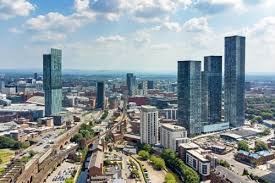
You don’t walk far in Manchester without noticing how the city’s skyline seems a little sharper now, a touch more purposeful. New or revitalised buildings rise alongside the red brick warehouses of old, and turn‑of‑the‑century façades are being coaxed back into use alongside gleaming steel and glass. It’s the sort of transformation that catches the eye of a passing visitor, but it’s the numbers and quiet decisions behind the scenes that tell the truer story of this city’s commercial property momentum.
Take the offices — once whispered about with uncertainty in the early pandemic — and now spoken about with a bracing confidence. In 2024 Manchester recorded one of its strongest years of office space take‑up on record, markedly above pre‑pandemic figures, and that trend has carried into 2025 with first‑half activity sitting comfortably ahead of long‑term averages. What’s palpable in these figures isn’t just recovery; it’s a deepening conviction that the city remains a destination for businesses of all sizes.
Maybe it’s the youthful pulse of its talent pool, or the way digital and creative sectors have gravitated here over the last decade. Whatever the mix, occupancy in city centre Grade A space — that is, the most premium office stock — has been particularly striking. Businesses are snapping up the best space they can find, and headline rents have responded accordingly, nudging towards new benchmarks that would have seemed ambitious only a few years back.
And yet, this isn’t just a tale of tall office blocks in Spinningfields or shiny towers along the waterfront. I was in a café near Old Trafford last spring, chatting with a small‑firm founder who’d just taken a modest but modernised office in a converted mill. He talked about the way hybrid working had changed how his team uses space — more collaboration zones, fewer fixed desks — and the subtle way that was influencing where and what he leased. Something about that conversation stuck with me, a reminder that demand isn’t just about square footage; it’s about how people feel about the places where they do their work.
The nature of office demand here has definitely shifted. It isn’t a simple return to the old normal. Firms are bullish, yes, but their requirements reflect new priorities: flexible leases, efficient layouts, communal and wellness‑oriented design elements. A century ago Manchester’s mills were the cutting edge of industrial innovation; today’s refurbished office is pitched with almost as much fanfare because it’s not just a workspace — it’s a statement about culture and identity.
This reimagining isn’t limited to the city centre either. Fringe areas and North Manchester towns have started to see their own bursts of activity, where hybrid models and more affordable rents appeal to smaller companies and start‑ups. These aren’t headline‑grabbing deals, but they’re quietly shaping the fabric of how business gets done across the broader region.
Of course, it would be naïve to suggest everything is rosy without tension. The supply of quality space remains tight. Vacancy at the prime end is low, and developers are cautious — facing higher build costs and finance hurdles that make speculative construction harder to justify. That scarcity, in turn, fuels competition and pushes rents upward, reinforcing a sense that the market’s fundamentals are strong even if its pipeline isn’t as deep as occupiers might like.
There’s a geopolitical dimension to this too. Manchester’s commercial property isn’t a silo; investors and firms watch London and other global markets for cues. When money starts moving, or when a major corporate chooses Manchester for a new headquarters, it seems to give everyone else permission to think a bit bigger. Whether it’s a telecom outfit expanding into a new city centre address or a tech firm refurbishing space in Salford Quays, these decisions ripple outward in subtle but real ways.
Yet, even as offices regain their footing, the wider commercial landscape is a mosaic. Retail and industrial sectors each have their own rhythms and pressures. Some retailers are reinvesting in physical stores as consumer behaviours adjust, and logistics hubs hum with activity as e‑commerce settles into a steadier pattern. These threads interweave with office trends to form a more complete picture of how Manchester functions as a business ecosystem.
Walking through Piccadilly Gardens on a weekday, you feel that blend of lived‑in city and working metropolis. People in tailored coats and lanyards pass students with backpacks, delivery cyclists weave through crowds, and distant scaffolding silhouettes hint at the next wave of transformation. The office demand — and all the decisions behind it — are part of that larger pattern.
In quieter moments, leaders here talk less about the old days of office doom and more about shaping a place that’s resilient, attractive, and relevant. They aren’t nostalgic for the pre‑pandemic status quo but seem eager to build something that reflects current needs while anticipating the next shift. How Commercial Property Trends Are Shaping Manchester isn’t just an economic story; it’s a social one, a narrative about how cities adapt, endure, and reinvent themselves through cycles of challenge and aspiration.