


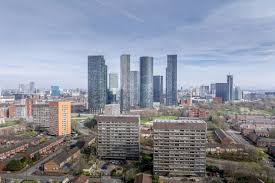
If you walked through Manchester’s city centre on a damp Thursday evening last autumn, you’d have noticed the same thing as dozens of locals I spoke to at pubs and restaurants: the place felt simultaneously buoyant and bruised. The outdoor heaters at Freight Island were roaring, punters clustered around craft beer taps and Nordic-inspired snack stalls, but just a few streets away the sudden shuttering of a beloved neighbourhood café was still a fresh topic of conversation at breakfast tables.
Manchester’s hospitality growth has become a story of contrasts — a market where openings and closures run almost in parallel, where bold investment rubs up against economic fragility, and where patterns of social life are shifting faster than they have for decades.
Official figures show that managed pubs, bars, and restaurants in Manchester recorded nearly 5 per cent sales growth over a recent challenging year despite a backdrop of rising costs and wider sector contraction elsewhere in the UK. Local business leaders point to a confidence and entrepreneurial drive that has kept new names appearing on the city’s dining map even as some old favourites pack up their aprons and corkscrews.
The numbers only tell part of the story, though. In neighbourhoods that were once dotted with traditional pubs and bars, many have disappeared over the last two decades, a trend confirmed by recent academic research showing that Manchester lost roughly a third of its bar count while restaurants gained ground. Patrons who once met for a pint now arrange dinner plans over Instagram DMs, and families make a night of it at independent bistros as much as at old corner pubs.
That generational shift — younger city-dwellers dining out more and drinking less — is part of why food and drink now account for a quarter of all high-street spending in Manchester. Cafés, bakeries, and restaurants have become footfall magnets in a way retail shops struggle to emulate, animating long city blocks at lunch, dinner, and throughout the weekends.
You could argue that the appetite for eating out is not just sustained by locals. Manchester’s packed events calendar — from sold-out gigs at Co-Op Live to conventions at Manchester Central and major festivals in summer — has created a kind of hospitality ecosystem where culture and commerce feed off each other. In venues from Northern Quarter backstreets to St Peter’s Square terraces, menus shaped by global influences sit alongside classic British fare, and visitors bring spend that verges on vital for margins thinned by rising overheads.
I remember standing outside a new Italian cocktail bar on Quay Street one spring evening, watching the queue for tables snake around the corner, and thinking that this was no flash-in-the-pan scene but something more durable.
Yet this city’s hospitality renaissance is not without its friction. Small independents and long-standing eateries have found the economic weather brutal. One Northern Quarter restaurant that had survived bank collapses, recessions, and even a pandemic closed after 22 years, its owners citing an imminent hike in business rates, energy costs and wages that simply outstripped their ability to stay afloat. Another story of a pizza and bar venue folding under “crippling energy bills” spread quickly on social media, a reminder that even in a growth narrative the slightest gust can topple a small business.
These stories aren’t anomalies. The national backdrop — from higher employer costs to legislative uncertainty — has squeezed margins across the UK hospitality sector, with closures and job losses making headlines even as some operators expand. Northern and southern city comparisons in recent industry reports show Manchester outperforming many peers in both site growth and customer experience metrics, but those numbers mask the churn that stops long-term operators from feeling secure.
At the same time, the industry’s adaptive energy is unmistakable. Independents have become a defining feature of the city’s food and drink identity, and for many, authenticity now trumps scale. Breweries, micro-bars, and chef-led restaurants curate menus that reflect Manchester’s multicultural pulse, and event catering firms have evolved beyond functional setups into creators of bespoke hospitality experiences for corporate and social audiences alike.
The work of local support networks, such as business growth hubs offering tailored workshops and guidance, also speaks to an ecosystem increasingly invested in sustainability and resilience. It may be hard to gauge the direct impact of these programmes yet, but they underscore how business owners here refuse to go it alone, even as they navigate unpredictable costs and changing consumer behaviours.
It’s worth noting how different this feels compared with a decade ago. Places like Manchester once competed with London for attention; now they increasingly chart their own course, with a hospitality sector that draws investment from both local entrepreneurs and international brands. Construction has even begun on high-profile projects that include luxury hotel and restaurant space, signalling confidence that Manchester can sustain not just growth but a kind of hospitality identity that’s credible on a global stage.
The churn of openings and closures, the patchwork of high energy bills and bold investment, the way people choose sushi over pilsner on a Thursday night — this isn’t a sector in stasis. It’s a sector reshaping itself, propelled as much by changing social habits as by economic necessity. And through it all, Manchester keeps reinventing what it means to eat, drink, and gather in a northern city that has learned to turn hospitality into a defining part of its urban character.