


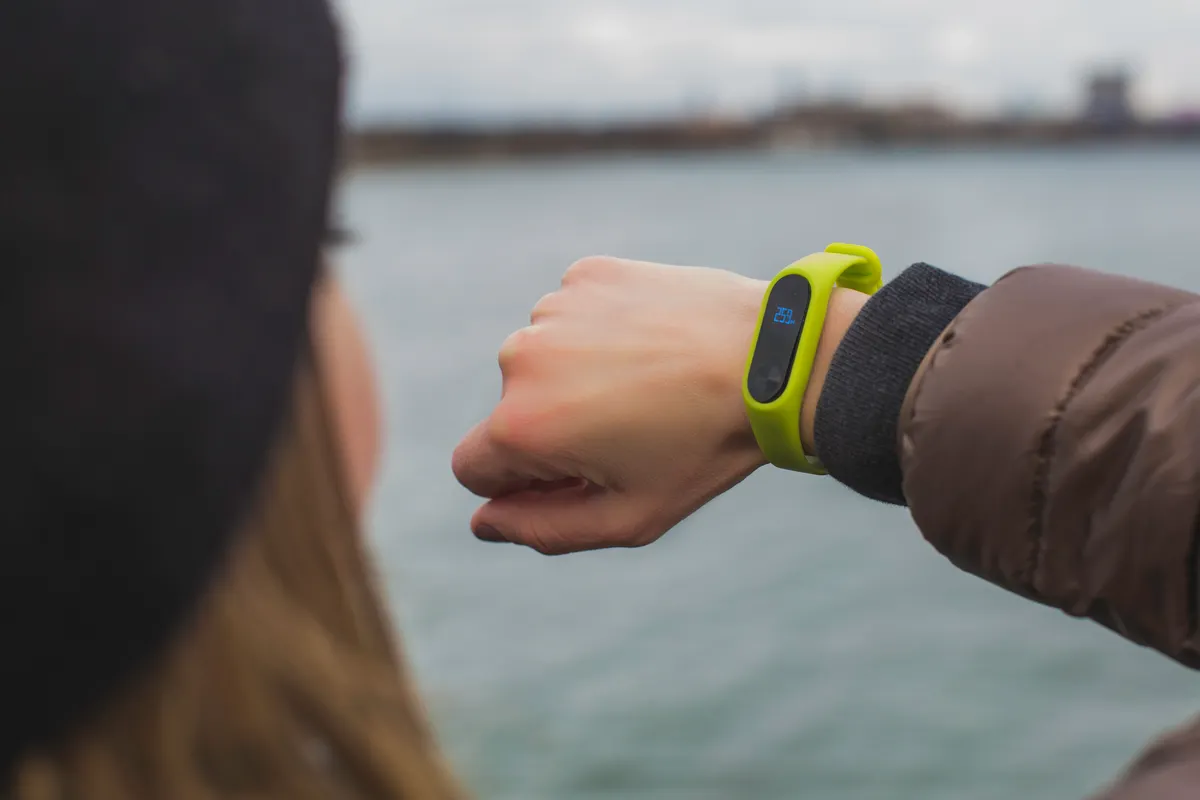
Fitness tracker calorie accuracy is, bluntly, poor, and the science has been saying so for years, even if the devices on your wrist haven’t caught up. Whether you’re running the canal towpath or grinding through a spin class, the calorie number your watch flashes at you is an educated guess at best, and a fairly wild one at worst.
This matters in Manchester as much as anywhere. The city has no shortage of people tracking every step from Ancoats to Altrincham, fuelling their training on numbers their devices have essentially made up. So here is what the research actually says, and what you can do instead.
How Fitness Trackers Arrive at a Calorie Figure
Trackers combine two main data sources: motion and heart rate. The accelerometer in your device picks up movement (the rhythm of a wrist swinging during a walk, the faster cadence of a run) and uses that to estimate steps and activity intensity. The heart rate sensor adds a second layer, particularly useful when you log a specific workout type like cycling or yoga, where hand movement alone tells the device very little.
Both streams of data then get fed into a proprietary algorithm alongside your age, weight and sex. The result is not a measurement of calorie burn; it is a probable estimate derived from incomplete inputs. The companies that make these devices are under no obligation to publish their algorithms or to verify their calorie counts against any independent standard. They can simply put a device on the market and let shoppers compare claims without any reliable accuracy data in sight.
What the Research Says About Fitness Tracker Calorie Accuracy
The picture painted by published studies is consistent, and not flattering. A 2020 study covering devices from Apple, Garmin, Polar and Fitbit found that every brand was inaccurate more often than accurate, using a plus-or-minus 3% threshold against lab-measured energy expenditure. Garmin devices underestimated calorie burn 69% of the time; Apple watches overestimated 58% of the time; Polar devices overestimated 69% of the time. Fitbits landed somewhere in the middle, underestimating 48% of the time and overestimating 39%, but being roughly right on average is not the same as being consistently useful.
A 2022 study that put volunteers through sitting, walking, running, cycling and strength training while wearing the Apple Watch 6, Fitbit Sense and Polar Vantage V gave every device a verdict of “poor accuracy” across every activity, with coefficients of variation running from 15% to 30%. A 2025 review of Apple Watch research found calorie burn was off by about 18% on average. AIM7 puts Fitbit’s average calorie expenditure error at 14.8%, and also notes that Fitbit underestimates heart rate by an average of 9.3 beats per minute during exercise, which sits upstream of those calorie miscalculations.
A University of Mississippi study found that Apple Watch has a mean absolute percent error of 27.96% for energy expenditure across walking, running, cycling and mixed-intensity workouts. That is a long way from the 10% ceiling proposed by the International Electrotechnical Commission as a standard for fitness trackers, a standard the 2025 review noted is not currently being met, though researchers acknowledged newer models may perform better than older ones.
Ring wearers are not off the hook either. According to Kygo, Oura measured a 21.1% error against indirect calorimetry in the lab. On the positive side, Oura recorded the strongest lab correlation of the devices tested, at r=0.93, suggesting it tracks the shape of your effort reasonably well even if the absolute numbers drift.
A 2026 study added another wrinkle: body fat percentage affects accuracy more than skin tone does. The higher a volunteer’s adiposity, the more inaccurate the calorie read. Garmin Forerunner 955 and Samsung Galaxy Watch 5 seriously overestimated; Apple Watch Series 8 also overestimated but less severely; Fitbit Sense 2 underestimated when it was not producing outliers entirely. The authors concluded that all devices “substantially misestimate” calorie burn during exercise.
So What Can You Actually Do?
Treat calorie burn as a number you cannot measure directly. Think of it as a black box: you burn some amount of calories; the watch does not know what it is; neither, really, do you. The practical workaround is to bypass the estimate altogether. If you want to manage your weight (up, down, or steady) you only need two of the three variables in the equation: what you eat, and what you weigh. Track your intake and watch the scale. If your weight is drifting down and you want to maintain, add food. If it is creeping up and you want to lose, cut back. The device on your wrist is optional for that calculation.
If your tracker is working for you as a motivational tool, keep using it. But the calorie number? File it under “rough guidance” and leave the dietary decisions to the scale.