


A partnership signed in London this month has linked Türkiye’s zero waste movement, one of the world’s most widely copied environmental initiatives, directly into the UK capital’s international climate action network, in a move that will shape discussions ahead of the COP31 summit which Türkiye is set to host.
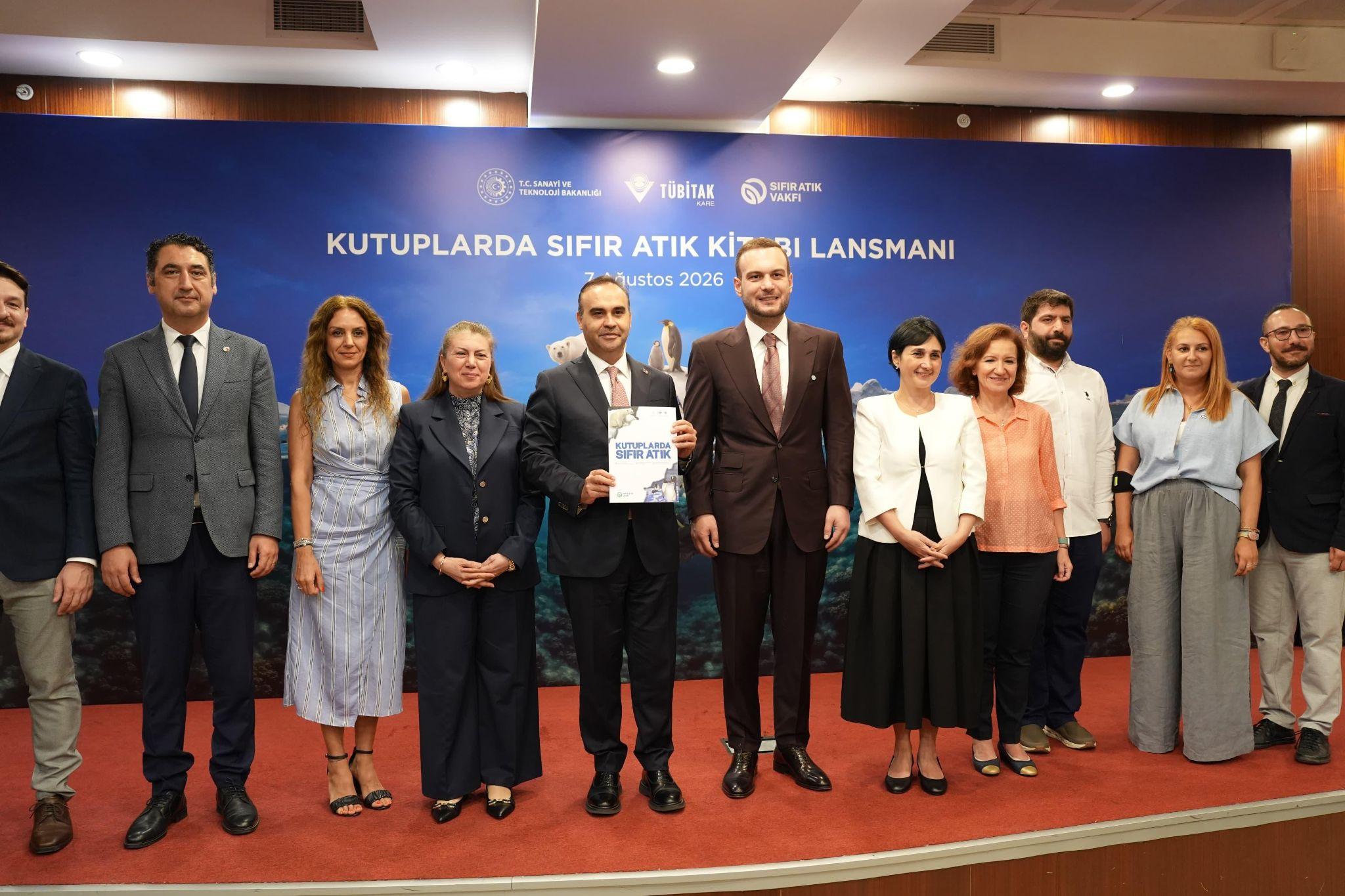
The Zero Waste Foundation and London Climate Action Week signed a cooperation protocol on 17 August covering climate action, zero waste and the circular economy. The agreement came just ten days after the Foundation launched a new book, prepared with TÜBİTAK’s Polar Research Institute, examining how zero waste principles can be applied to scientific research in the Arctic and Antarctic.
For readers following Britain’s role in global climate diplomacy, the timing matters. London Climate Action Week draws together government figures, city leaders, businesses, financiers, academics and community groups from across the world each year. The new protocol gives Türkiye’s zero waste and circular economy experience a formal channel into that London-based network, with both sides hoping to build on it at COP31 and at future editions of the London event.
What was agreed in London
The protocol establishes an institutional partnership between the two organisations, aimed at strengthening knowledge exchange, joint initiatives and international dialogue on zero waste and circular economy approaches. It was signed by Samed Ağırbaş, President of the Zero Waste Foundation and COP31 High-Level Climate Champion, and Nick Henry, Climate Action Founder and CEO.
“After this cooperation protocol, I hope we will carry out strong work and organize joint events at COP31 and London Climate Action Week,” Ağırbaş said.
Officials on both sides have framed the agreement as a practical exchange rather than a purely symbolic gesture. COP31, which Türkiye is preparing to host, provides the wider diplomatic backdrop, but organisers say the immediate focus is on concrete collaboration between the Foundation and the LCAW network, from shared knowledge on waste reduction to joint events bringing together officials, scientists and civil society groups.
The broader aim, according to those involved, is to keep zero waste thinking connected to resource efficiency and circular economy policy rather than narrowing it down to recycling or bin collection schemes, a distinction organisers say has often been lost in public debate about environmental policy.
The polar science behind the initiative
The London agreement follows closely on the heels of the book launch on 7 August, which brought together Türkiye’s zero waste programme and its polar research expeditions, two national initiatives that both began in 2017.
Mehmet Fatih Kacır, Minister of Industry and Technology of Türkiye, said the book brought the two schemes together. “The Zero Waste initiative launched under the leadership of H.E. Emine Erdoğan has grown step by step from a national initiative into a global one,” he added.
“At the same time, we began organising scientific expeditions to Antarctica and the Arctic under the auspices of the President of the Republic of Türkiye, enabling Turkish scientists to strengthen the country’s presence in polar research. Through this book, these two initiatives have come together.”
Titled “Zero Waste in the Polar Regions”, the book draws on scientific data to examine climate change, environmental pollution and zero waste practice in the Arctic and Antarctic. It compiles 18 articles from scientists who have taken part in polar research, covering the scientific, technical, administrative and communication sides of applying zero waste principles in some of the planet’s most remote environments.
Rather than focusing solely on collecting waste once it is produced, the book looks at how research expeditions are planned from the outset, how materials and resources are sourced and used, and how energy, water and logistics are managed throughout. The underlying argument is that waste should be designed out before it is created, with resources used as efficiently as possible to limit the environmental footprint of scientific activity in these fragile regions.
Why the story extends beyond the poles
The publication describes the polar regions as critical indicators of global climate change, noting that environmental shifts recorded there have consequences that reach far beyond the Arctic and Antarctic themselves. That framing is intended to give the research relevance well beyond the geography in which it was carried out, tying it back to the wider climate conversations now taking shape in London and, eventually, at COP31.
The study is also presented as part of the broader zero waste vision championed by H.E. Emine Erdoğan, Founder of the Zero Waste Movement, Chair of the UN High-Level Advisory Board on Zero Waste and Honorary President of the Zero Waste Foundation. Since its launch in 2017, the zero waste initiative has expanded from a domestic Turkish programme into one referenced in international environmental policy circles, a trajectory officials say the new London partnership is intended to continue.
Taken together, the two developments, the polar research book and the London protocol, link scientific research, resource efficiency and circular economy thinking to a wider stage of international climate action. For audiences in the UK, the significance lies less in the polar science itself and more in what it signals: a formal, London-anchored channel through which Turkish environmental policy will feed into climate discussions in the run-up to COP31, discussions in which British institutions, cities and businesses are expected to play an active part.
Organisers on both sides say further joint events are expected to follow, with London Climate Action Week and COP31 both cited as likely venues for the next stage of cooperation between the two organisations.