


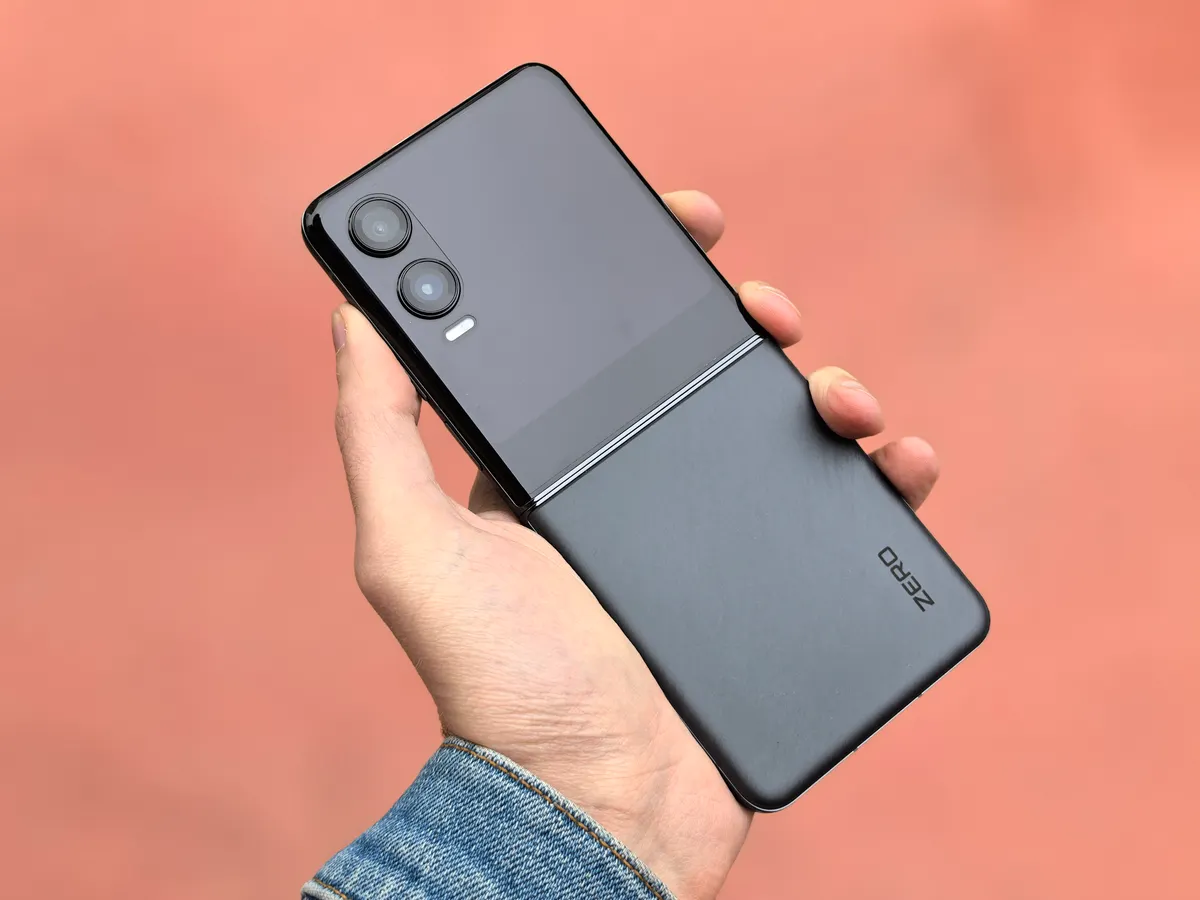
Apple’s iPhone Duo arrives as the company’s first foldable, but the iPhone Duo missing features found on the iPhone 18 Pro is a longer list than the price tag might suggest. Starting at $1,999 and climbing to $3,199 for the 2TB variant, this is not a cheap compromise device. Yet compared with the 18 Pro and 18 Pro Max, the Duo skips a surprising amount.
That tension is worth spelling out clearly before you part with the money. The Duo does things neither Pro model can match, including a display that Apple says is 50 per cent larger than the iPhone 18 Pro Max when unfolded, and an outer screen that covers more than 90 per cent of the Pro’s screen area when closed. But size alone doesn’t cover everything, and the trade-offs are real.
Camera is Where the iPhone Duo Missing Features Hurt Most
Start with the selfie camera. The Duo ships with a 12-megapixel Center Stage camera on its outer display. The iPhone 18 Pro and 18 Pro Max both carry an 18-megapixel Center Stage sensor for the same job. The Duo also has an under-display front camera on the inner screen, and since Apple hasn’t disclosed its resolution, it’s reasonable to assume it falls short of the 18 Pro too.
There is a partial workaround. When the Duo is unfolded, you can use the rear camera system with the inner display as your viewfinder, which will produce better selfies than any front-facing sensor. But that’s a workaround, not a solution.
The rear cameras bring further gaps. The iPhone 18 Pro carries a 48-megapixel Fusion Telephoto camera with a tetraprism design and 4x optical zoom, according to Apple’s iPhone 18 Pro specs page. The 18 Pro Max pushes that to 8x optical zoom. The Duo gets neither. Its zoom range runs from 0.5x to 2x across its ultrawide and Fusion cameras, and that’s your lot.
Variable aperture on the primary rear camera is another 18 Pro exclusive. Combined with Pro Controls, which let you manually adjust aperture, shutter speed and other settings in the Camera app, the 18 Pro series offers a level of manual creative control the Duo simply doesn’t have. Spatial photos, Spatial videos, and ProRAW are also absent from the foldable, as is the four-microphone studio-quality array Apple put into the 18 Pro and 18 Pro Max for video audio capture.
Apple Reference Image, the company’s new feature for verifying that a photo was captured on an iPhone 18 Pro device and wasn’t AI-generated, is also limited to the Pro series. The Duo misses out there too.
Hardware Differences Beyond the Cameras
No Action button on the Duo. No mute switch either. Every iPhone since the 15 has carried a programmable Action button, mappable to screenshots, shortcuts, or custom automations. The Duo’s only physical controls are volume and power. It’s a noticeable absence on a device at this price.
There’s no LiDAR scanner, which rules out the more precise distance-measuring and 3D-scanning applications that work well on the Pro series. Face ID is out too. Apple went with Touch ID instead, which makes practical sense given the Duo has multiple front-facing cameras across its two displays, but it is a departure from what Pro buyers expect.
Colour options are limited to Night Sky and white. The 18 Pro and 18 Pro Max get the new Glacier and Burgundy finishes. For a device positioned above the Pro in terms of price, being handed two colours feels like a shrug.
On SIM support, the Duo is eSIM-only worldwide, the first iPhone to ship that way globally. The 18 Pro will include at least one physical SIM slot in most regions outside its 12 eSIM-exclusive countries. Physical SIMs still matter for anyone who picks up cheap prepaid cards while travelling, and losing that option is a practical inconvenience rather than a dealbreaker for everyone, but it’s still a narrowing of flexibility.
According to AppleInsider, the iPhone 18 Pro Max itself runs a 6.9-inch display at 2,868 by 1,320 pixels, so the screen the Duo is 50 per cent larger than is already a substantial panel. The Duo’s unfolded size is genuinely impressive. Whether the display advantage covers the camera, hardware and software gaps is the question every buyer needs to answer for themselves before handing over up to $3,199.