


Walking through Spinningfields on a Wednesday morning, the streets feel quieter than they did five years ago. Offices stand tall, glass façades catching the winter sun, but inside many desks sit empty. Manchester firms are grappling with a question that has become almost existential: invest in permanent office space, or lean into flexible work environments that can scale with shifting hybrid schedules?
Property agents report a subtle bifurcation in demand. Larger, established companies remain tethered to long-term leases in traditional office blocks, citing stability, brand presence, and the subtle status of a permanent address. Yet, smaller firms, start-ups, and consultancies are increasingly drawn to flexible coworking setups. They crave agility: the ability to expand or contract their space without renegotiating a five-year lease or navigating labyrinthine landlord terms.
Hybrid work has rewritten the old calculus. Staff aren’t expected in the office every day, but they still crave collaborative zones, impromptu meeting spots, and spaces that signal a shared culture. For some, that means trading square footage for quality of experience. A Manchester-based tech start-up I spoke with last week rents a small permanent office in the Northern Quarter but supplements it with a nearby flexible hub. Their reasoning is simple: pay for presence, not emptiness.
There’s also a quiet but perceptible psychological shift among staff. Many employees enjoy the autonomy that comes with hybrid schedules, yet they want spaces that encourage serendipity—the chance encounter at a coffee bar that sparks a project, a conversation overheard near a meeting room, a whiteboard moment that can’t happen on Zoom. Flexible spaces cater to this in ways traditional offices often struggle to replicate, especially in older, grid-like buildings.
Of course, cost remains a decisive factor. Locking into a conventional lease can be a gamble when revenue projections wobble under inflationary pressure. Flexible providers, meanwhile, package services—cleaning, IT, amenities—into one monthly fee. Some CFOs view it as a hedge: predictable, adjustable, and scalable. Others argue it’s a hidden premium for convenience, a long-term expense that grows faster than a static lease. The debate is subtle and ongoing.
City planners have noticed another layer to the story. Flexible hubs often cluster near transport nodes, cafés, and cultural landmarks, shaping micro-economies within the city. They generate footfall that traditional offices do not, enlivening streets that might otherwise be deserted by mid-morning. Yet, this decentralization sometimes fragments teams and dilutes corporate identity. The office, when carefully designed, still exerts gravity over talent in ways that no subscription model can.
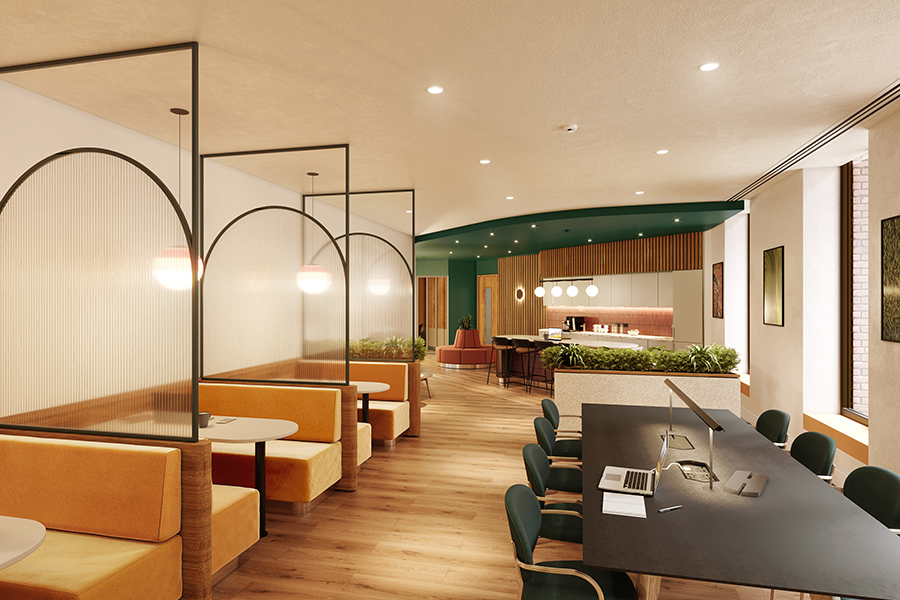
I remember sitting in one such coworking lounge, a soft hum of keyboards and conversation around me, and thinking about the odd alchemy of presence and productivity. The room buzzed, yet no one was formally “working” in the old sense—they were collaborating, networking, and sometimes just sketching ideas in the air. It struck me that the hybrid model isn’t just about where you sit; it’s about how work happens.
The property market itself is adjusting. Landlords now offer more flexible terms, shorter leases, and hybrid packages. Some convert unused floors into shared hubs or incubator spaces, recognizing that the old one-size-fits-all lease is increasingly obsolete. Analysts suggest that Manchester’s office market is entering a transitional era, where hybrid work patterns will dictate design, location, and even amenities more than traditional square-footage economics.
Yet, there are contradictions. Firms that champion hybrid policies still report that morale and cohesion improve when teams gather physically. Onboarding new staff, mentoring, and cultural transmission all benefit from a shared physical presence. Flexible space providers respond with clever layouts, bookable “team zones,” and event calendars, but they can never fully replicate the permanence of a dedicated office.
Inevitably, the conversation circles back to growth trajectories. A fast-scaling consultancy may value flexible hubs for speed, while a media company building a distinctive brand identity may prefer a landmark building with a stable address. Some firms hedge: they maintain a core office for critical staff and culture, while outsourcing overflow, project teams, or experimental units to flexible hubs. It’s a layered, almost patchwork approach, revealing that one solution rarely fits all.
Manchester’s office landscape today feels like a negotiation between the past and the future. Glass towers and heritage buildings coexist with modular coworking spaces. Leaseholders and members rub shoulders in cafés and communal lounges. The ultimate preference of firms seems less about choosing between two models and more about blending them intelligently—crafting hybrid ecosystems that respond to people, productivity, and unpredictability.
The question is no longer whether to have a traditional office or a flexible hub. It’s how much of each, where, and why. Manchester’s firms are discovering that the “ideal” workspace is mutable, responsive, and deeply tied to their people’s rhythms. And in that quiet recalibration, the city’s commercial landscape is quietly, intriguingly reshaping itself.