


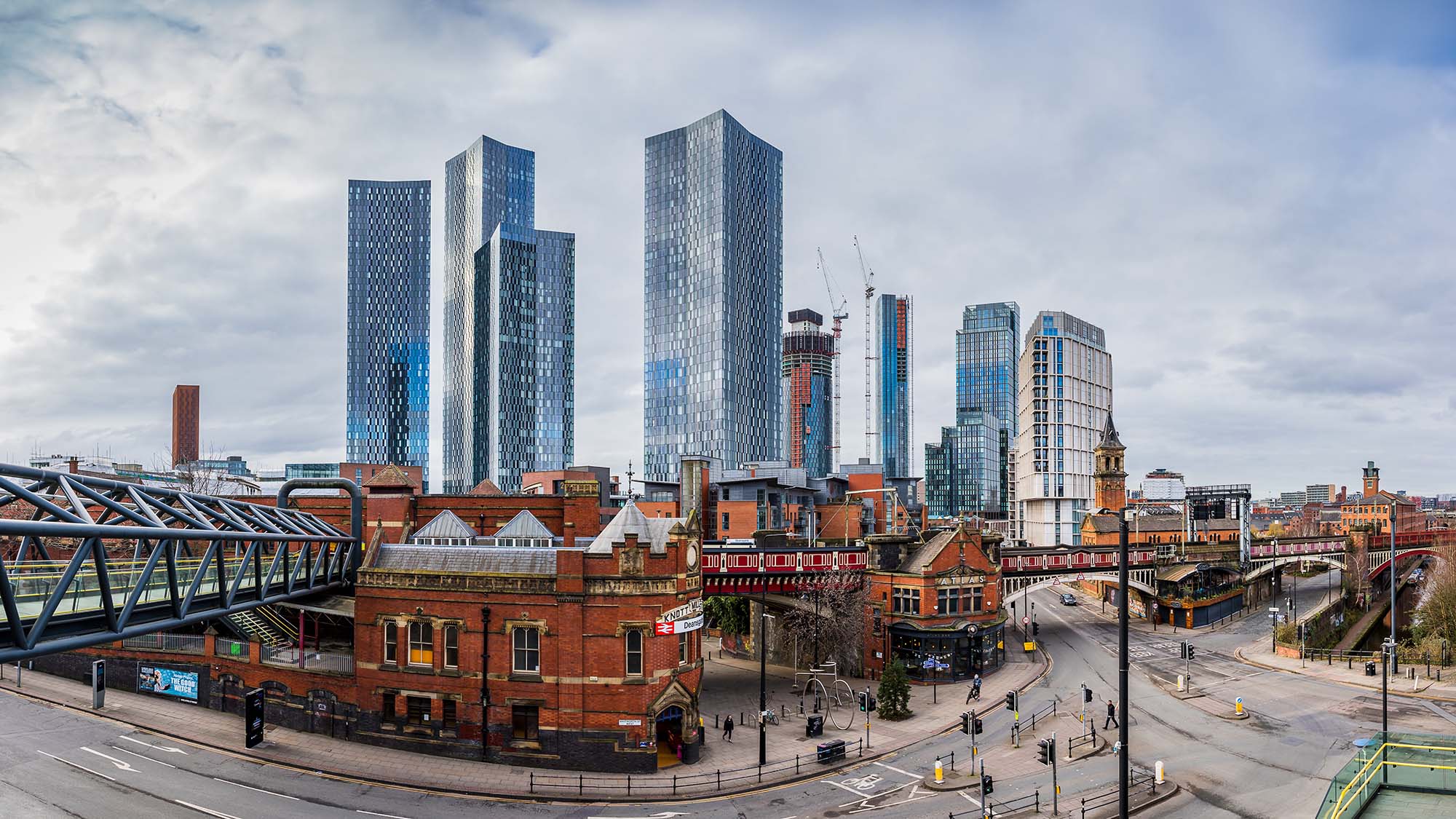
Manchester has always rebuilt itself in public view. The mills came down slowly, brick by brick, and for years the empty spaces felt like a pause rather than an ending. Over the past decade, those pauses have been filled with cranes, hoardings, and planning notices that most residents learned to ignore until the noise arrived at street level.
The first noticeable change for many businesses wasn’t architectural but logistical. Roads closed earlier than expected. Foot traffic shifted without warning. A café owner near Oxford Road once told me their morning trade dipped sharply for six weeks because a pedestrian diversion added ninety seconds to the walk from the tram stop. Ninety seconds mattered. It still does.
Large regeneration schemes tend to be framed as abstract wins, but their impact lands in very practical ways. When the Northern Quarter began edging eastward into Ancoats, rents didn’t spike overnight. They crept. A bakery that had survived on a modest wholesale contract suddenly faced a lease renegotiation that assumed future footfall rather than present turnover. Investment optimism has a way of arriving before revenue.
Infrastructure spending has unquestionably reshaped how businesses move and connect. The expanded Metrolink lines changed hiring patterns more than they changed commuting times. Firms that once limited recruitment to postcode clusters quietly widened their net. A digital agency in MediaCity told me they started seeing applicants from Bury and Ashton without adjusting salaries, something that felt improbable ten years earlier.
There is a subtle difference between regeneration that supports commerce and regeneration that simply surrounds it. New public squares look impressive in renders, but businesses care more about loading bays, broadband reliability, and whether customers can cross a road without feeling rushed. I’ve watched beautifully finished developments struggle for months because no one thought about where delivery vans would stop.
The city centre transformation has benefited larger firms disproportionately, at least at first. Corporate offices moved into Grade A spaces with confidence, drawn by predictable infrastructure and proximity to transport. Smaller operators followed later, often at higher cost, often with thinner margins. Regeneration compresses timelines; businesses that adapt quickly survive, and those that hesitate feel exposed.
Salford Quays offers a different lesson. MediaCity didn’t just attract broadcasters; it created an ecosystem of satellite services that didn’t exist locally before. Accountants learned the rhythms of production cycles. Caterers adjusted menus around late shoots. The regeneration wasn’t just physical; it reprogrammed local business behaviour.
Still, not every outcome feels settled. I remember standing near Piccadilly during one of the early demolition phases, watching a long-established signage shop close its shutters for the last time, and feeling uneasy about how little notice anyone else seemed to take. The market absorbs these moments quietly.
Investment capital has flowed into Manchester with unusual confidence, and businesses feel that confidence as pressure. Property-linked regeneration often assumes scale, speed, and growth, while many local firms operate on patience and repetition. A family-run hardware store doesn’t pivot quarterly. When its surroundings do, friction is inevitable.
Yet regeneration has also reduced certain barriers that once defined the city. Improved rail links and station upgrades have changed how Manchester businesses pitch themselves nationally. Meetings that once required overnight stays now fit into a single day. That shift sounds minor, but it alters how clients perceive reliability and reach.
There’s an under-discussed emotional component to all this. Business owners talk about pride when their area improves, even if costs rise. One retailer near Deansgate said they didn’t mind higher rent as much as they minded feeling invisible during planning consultations. Regeneration can feel like something done to a place rather than with it.
Decision points matter. The approval of mixed-use developments signalled a long-term bet on blended commercial life rather than single-purpose districts. That choice favoured flexible businesses and penalised those tied to narrow time windows. Late-opening venues thrived where nine-to-five shops struggled.
I found myself quietly admiring how quickly some firms learned to read construction timelines like weather forecasts, planning promotions around disruption rather than waiting it out. That kind of adaptation doesn’t show up in investment reports.
Employment patterns have shifted alongside the skyline. New offices brought demand for services that hadn’t been viable before, from wellness providers to niche logistics firms. Regeneration created density, and density created secondary markets that didn’t rely on tourists or headline employers.
The risk, increasingly, is uniformity. When regeneration is too tightly managed, commercial streets begin to resemble each other. Independent businesses that once gave Manchester its texture now compete with brands that can absorb short-term losses for long-term presence. Customers notice this, even if they struggle to articulate it.
Infrastructure upgrades have also altered perceptions of distance. Areas once described as “up-and-coming” are now simply part of the city’s working map. That normalisation benefits businesses willing to move early, but it leaves late adopters paying for certainty they didn’t help create.
What stands out most is how regeneration has shortened memory. Newer businesses often don’t realise how recently their neighbourhoods were considered marginal. Older firms remember every planning delay, every consultation meeting that promised balance. Both operate side by side, shaped by the same investment but interpreting it differently.
Manchester’s regeneration hasn’t finished, and perhaps it never will. For businesses, the impact isn’t a single outcome but a constant recalibration. Success now depends as much on reading the city’s intentions as on reading the market. The cranes will move on, but the decisions made under them will linger.