


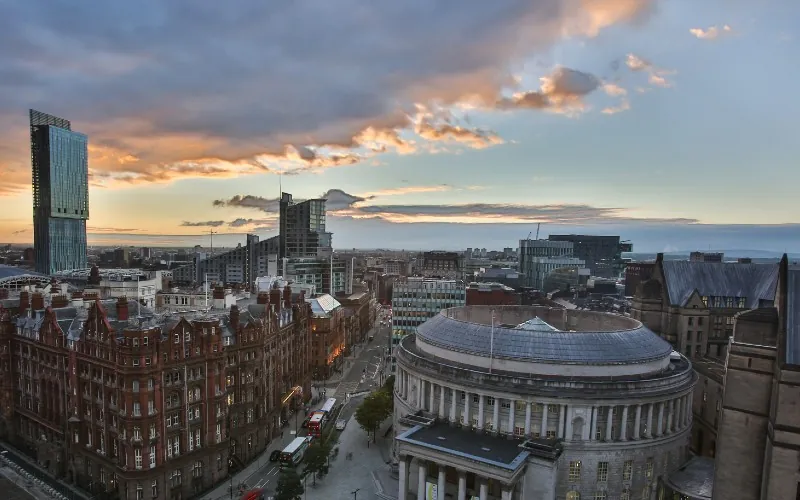
Manchester did not wake up one morning and decide to become a counterweight to London. The shift happened gradually, through practical decisions rather than grand announcements. Office blocks once tied to manufacturing were repurposed quietly. Old warehouses gained fibre connections before they gained signage. The city’s support for technology grew out of habit and necessity, not aspiration alone.
For years, ambitious graduates were expected to leave. The logic was simple: serious tech careers meant London. Manchester challenged that assumption not with slogans, but with alternatives. Rent stayed manageable. Commutes stayed short. Founders could afford to fail once or twice without disappearing entirely. These conditions mattered more than press coverage.
Manchester tech innovation has always leaned toward applied problem-solving rather than spectacle. Health technology firms clustered near research hospitals. Media technology grew naturally from the city’s broadcasting legacy. Logistics software emerged close to the motorways and warehouses that actually needed it. The city did not try to copy London’s fintech obsession. It focused on what was already present.
Universities played a quieter role than expected, but a decisive one. Research departments worked alongside startups without much ceremony. Spinouts did not feel exotic. Students moved between part-time coding work and coursework with little distinction. There was less emphasis on “disruption” and more on continuity. Things built here tended to stay here.
Local government involvement rarely made headlines, yet it shaped the environment steadily. Planning approvals were predictable. Regeneration projects connected transport, housing, and workspace rather than isolating them. Tech clusters formed because it made sense to walk between meetings, not because a map demanded it. Bureaucracy did not vanish, but it became navigable.
The real difference appeared in how risk was treated. London often celebrates scale first, sustainability later. Manchester reverses that order. Investors ask about burn rates before growth charts. Founders talk about profitability without embarrassment. This cautious confidence has allowed companies to age, not just launch.
Regional tech ecosystems tend to reveal their strength during downturns. When funding tightened nationally, Manchester companies quietly adjusted instead of collapsing. Hiring slowed, not stopped. Offices shrank, but teams stayed intact. The city had not built its identity around constant expansion, so contraction did not feel like failure.
Talent circulation has become one of Manchester’s unspoken advantages. People leave for London or overseas, then return with sharper skills and fewer illusions. They bring experience without arrogance. They often cite lifestyle as the reason, but the subtext is control. Here, careers feel steerable again.
I remember sitting in a converted mill watching a startup demo a tool built for local councils and thinking how unfashionable, and how necessary, it all felt.
Community networks in Manchester operate without much performative networking. Meetups feel practical. Conversations turn quickly to procurement hurdles or client behaviour. There is less emphasis on personal branding. Success is measured by contracts renewed, not followers gained.
The city’s affordability still matters, though it is tightening. Founders can test ideas without immediately seeking large investment. Early teams form around trust rather than compensation packages. This creates businesses that know each other well before growth complicates relationships.
Regional tech strength also depends on infrastructure that rarely gets credit. Reliable public transport allows companies to recruit across neighbourhoods, not just postcodes. Co-working spaces appear where people already travel, not where branding looks best. Even weather shapes behaviour; people linger indoors, working longer, talking more.
Manchester’s distance from London is both symbolic and practical. It forces independence. National policy debates feel slightly abstract here, filtered through local consequences. When funding schemes change, businesses adapt rather than wait. When regulation tightens, legal advice is shared informally across networks.
There is also a cultural memory at work. Manchester understands cycles. Industries rise and fall. Buildings are reused. People stay. This long view tempers the impatience common in technology sectors. Companies plan for durability, not exits alone.
Regional tech does not mean small ambition. Manchester firms export globally. They compete internationally. But their identity is not built on comparison. London is not the benchmark; functionality is. If a product works, scales sensibly, and keeps staff employed, it is considered a success.
Support systems have matured quietly. Accelerators focus less on pitching and more on governance. Mentorship is practical, sometimes blunt. Advice is offered with context, not slogans. The city’s tech support ecosystem resembles a workshop more than a showroom.
What stands out most is how ordinary it all feels. Innovation here is not staged. It happens between meetings, during long-term contracts, across repeated iterations. Manchester supports tech not by celebrating it constantly, but by making it livable.
The city’s role outside London is no longer defensive. It does not argue for relevance. It demonstrates it, daily, through companies that endure, workers who stay, and systems that hold. Manchester tech innovation thrives because it fits the city, not because it tries to outshine another.