


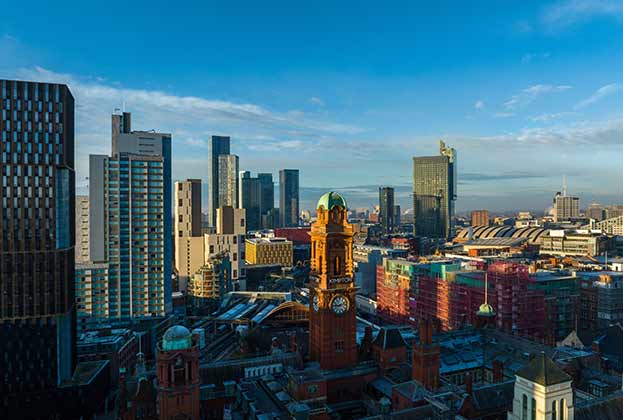
By February, the cafés on Oxford Road were already opening later than they used to. The owners would raise the shutters halfway and wait for a reason to turn on the lights. It was a small change that you might not have noticed unless you walked by every morning, but it showed that Manchester’s small businesses were carefully adjusting to new conditions. Not because they were lazy, but because they were planning, hours were being cut. Every kilowatt, every shift of staff, and every quiet hour now had a sharper question mark.
Almost every conversation is about costs. Rent stays high, especially in areas that used to market themselves as cheaper alternatives to the city center. Energy bills have leveled off compared to the big jumps of previous years, but they still don’t feel normal. For businesses with small profit margins, “stable” still means too high. Suppliers, who are under their own stress, pass on price increases in small amounts that seem unavoidable but are big enough to hurt.
Staffing is now a quieter but bigger concern. The job market in Manchester is tight, and small businesses don’t have the same level of competition. Larger companies can handle wage increases or give benefits that smaller companies can’t match. A restaurant manager in Ancoats said that he trained three junior chefs in a year, but they all left within a few months. His voice didn’t sound angry; it sounded tired. He said that being loyal has become costly.
Some owners have tried to get around the problem by cutting back on services or days open. Others are doing the work themselves again, going back to long shifts they thought they had left behind. The romantic idea of the hands-on owner comes up again here, but it doesn’t have the same charm. This isn’t passion; it’s a need.
Footfall is harder to read now than it used to be. The city center still gets busy on weekends and during big events, but it’s hard to predict what will happen on weekdays. The rhythm of whole streets has changed because of hybrid work. Stores that used to depend on the steady lunch crowd from Monday to Friday now have to deal with quiet times that are suddenly broken by rushes. Under those conditions, planning stock or staffing feels less like management and more like making guesses.
Digital costs have slowly become a part of the equation. It’s no longer optional to be seen online, but it costs more to stay visible. Without warning, advertising platforms change their rules. Each line item for website maintenance, cybersecurity, booking systems, and payment software seems small on its own, but when you add them all up, they add up to a lot. Digital transformation has stopped feeling like progress and started to feel like overhead for a lot of small and medium-sized businesses in Manchester.
Rules make things even harder. Following the rules about hiring, protecting data, and getting a license has gotten harder, and small business owners don’t have the time to figure it all out. Specialists work for bigger companies. Smaller ones depend on evenings, weekends, and quiet advice from friends. Mistakes have consequences, but keeping up is a form of unpaid work in and of itself.
Access to money is still not equal. The rules for getting a loan have gotten stricter, and even though there are other ways to get money, they often come with strings attached. Some owners are afraid to take on debt at all because they remember how things have been so unstable lately. Plans for growth are on hold, not because the desire has faded, but because the risk feels bigger now.
I remember standing in a small print shop near Deansgate after the owner had finished explaining his monthly expenses. He sounded so calm for someone who was clearly doing mental math all the time.
It’s hard to figure out how consumer behavior has changed. Customers still talk about community, share posts online, and support local businesses. But people are more sensitive to price changes, and sometimes a lot. Small businesses are stuck between wanting to stay open and the fact that they can’t keep prices low. People often raise prices for personal reasons, like being afraid of losing regular customers.
Some areas feel this more strongly than others. Online giants and discount chains put pressure on independent stores. People who work in trades have to deal with rising material costs and clients who put off making decisions or change the terms of their contracts in the middle of a project. Professional services have longer sales cycles because clients look closely at every cost. Even small and medium-sized businesses that focus on technology, which are often thought to be safe, are reporting slower deal closures and careful buying.
But resilience can show up in places you wouldn’t expect it to. Not just as a buzzword, but as a way to stay alive, people are working together more. Shared spaces, marketing together, and events together are all ways that small businesses help each other get things going when they can’t do it on their own. In places like Chorlton and Prestwich, this has become very local, based on trust that has built up over the years.
A change in generations is also happening. Younger entrepreneurs often have lower expectations of stability and are more comfortable with uncertainty when they start a business. They mix physical and digital models, question what their predecessors thought was true, and find new ways to make money. This flexibility doesn’t get rid of the pressure; it just changes how it is handled.
One thing that stands out about Manchester is how few people complain, at least in public. The talks are practical and focus on finding solutions instead of blaming others. That stoicism can be admirable, but it also hides weakness. When margins are thin, shocks don’t make a lot of noise; they build up slowly.
There are local support programs, but not everyone knows about them or can get to them. Some businesses get help from grants, advice programs, or projects run by the council. Some people miss out because they don’t have the time or confidence to apply.People regularly talk to each other about things, and that doesn’t necessarily happen through formal means.
By late afternoon, many small business owners are already thinking about tomorrow instead of today. The issues of 2025 aren’t so big by themselves. They never give up. They have to alter all the time and make minor decisions over and over again while being under modest but persistent stress. Manchester’s small companies are remaining open, not because things are wonderful, but because if they closed, they would lose something very personal: their independence, their identity, and the feeling that their place in the city still matters.