


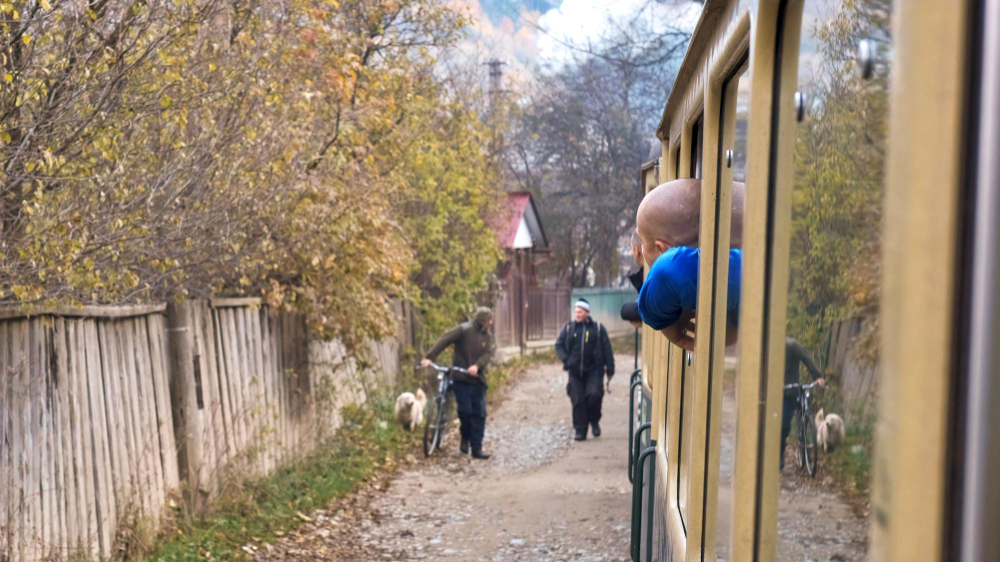
A group of schoolchildren are waiting in Loxley under a flickering streetlamp just before sunset. The bus is currently eighteen minutes late. Their parents are already concerned, and their phones are buzzing with missed connections. Sheffield’s silent everyday reality is becoming more and more like this.
The city’s buses, which were once a reliable means of transportation from residential areas to workplaces, educational institutions, and assisted living facilities, are disappearing. In South Yorkshire, entire regions now depend on good fortune, crossed fingers, and the hope that the next one won’t be canceled.
| Location | Sheffield, South Yorkshire |
|---|---|
| Main Issue | Widespread bus service cuts and declining public transport |
| Timeline | Escalated post-pandemic; public takeover planned by 2027 |
| Operators Involved | First South Yorkshire, Stagecoach |
| Public Control Plan | Franchising system to begin in 2027 |
| Government Support | £17 million investment; new electric buses in rollout |
| Local Response | Protests, petitions, and community campaigns |
| Environmental Impact | Rising car usage, increased emissions, lost climate gains |
| Key Source | BBC News, Sheffield Tribune, The Guardian |
Numerous routes have been reduced or eliminated completely in the last two years. Areas already removed from Sheffield’s political center, such as Wisewood, Stannington, and Lowedges, have seen a decline in ties. Initially, the issue was “demand recovery,” or the lack of drivers. The wording has now changed to “rationalization.” The locals just refer to it as abandonment.
Operators such as First and Stagecoach argue that the cuts are justified due to a decline in ridership following the pandemic. They use sustainability—not the ecological kind—to support their position. Only the most lucrative corridors are thought to be worth maintaining because financial survival has taken precedence.
Even though it makes sense economically, that reasoning has disastrous social effects.
Sheffield’s network now operates more like a sieve than a service, funneling convenience to a select few while depriving many of basic mobility by isolating less commercially viable neighborhoods. the elderly without vehicles. teenagers with no choices. Dark walks home are the only option for shift workers.
The £17 million the government has set aside to upgrade “unreliable routes” is undoubtedly welcome, but noticeably insufficient. It has the same effect as bringing a fire extinguisher into a smoke-filled room. Older diesel buses are still trudging through already-polluted corridors, while some new electric buses are joining the fleet.
There is a plan in place to return public control to South Yorkshire through bus franchising by 2027. Similar to the system in London, the goal is to combine timetables, fares, and operations under a single, responsible entity. However, while the crisis is occurring in real time, that promise is several stops down the line.
With dedicated lanes, roadworks in Broad Street now give priority to buses. It’s a very effective and symbolically encouraging move that suggests public transportation may once again be taken seriously in the future. However, infrastructure by itself cannot repair what has already been destroyed, particularly when there are no longer any routes to utilize them.
Campaigners have responded with remarkable fortitude throughout the city. Marches have taken place, petitions have been distributed, and even elderly people have stood in the rain with signs that said, “We won’t be left behind.” These are not staged photo ops. They are manifestations of democratic memory, which is incredibly powerful.
“This is worse than when Thatcher deregulated it all,” I heard a retired nurse say quietly during a rainy Thursday protest in Hillsborough last autumn. I trusted her.
An 18% decrease in passengers between 2009 and 2019 or the fact that only 61% of South Yorkshire riders are satisfied with the current service are two examples of frustration that is frequently expressed numerically. However, emotional indicators are more revealing. To get their toddler to daycare, a parent must balance two buses. On a Sunday, a disabled man is unable to get to the pharmacy. These are the results of design, not anomalies.
Sheffield’s path is not the only one. Silently, similar cuts are being made across the nation. However, the gap between lived experience and civic aspirations feels particularly acute in Sheffield. Despite the city’s public pledge to achieve net-zero emissions by 2030, the use of cars is still on the rise because of transportation gaps that were previously filled by basic bus service.
Aside from environmental concerns, this change is especially detrimental to economic inclusion. Equity breaks down when access to healthcare, education, and employment is reliant on private means. Public transportation is a problem of opportunity as much as mobility.
Louise Haigh of Labour, whose own constituency in Sheffield is impacted, has called the current state of affairs unsustainable. Giving franchising authority to all councils—not just those with elected mayors—is one of her suggested reforms. It’s a particularly creative strategy, based on the notion that local, responsible, and compassionate decisions should guide transportation.
Even the greatest ideas, however, have limitations. Bus network investments are still made piecemeal because national political narratives are dominated by fiscal caution. Although fare caps, such as the £2 initiative, are a significant improvement over previous prices, short-term fixes cannot replace long-term planning.
Therefore, Sheffielders are left with uncertainty. Will the bus arrive? Is it going to be there next month? More generally, who gets to determine what mobility means for a city that aspires to be inclusive, environmentally conscious, and forward-thinking?
Recently, while strolling along Chapel Walk, I noticed a bakery that was closed and had a handwritten note in the window that read, “Closed.” No employees. Not a bus. The message was more symbolic than it was meant to be.
The city waits and watches for the time being. For public gatherings, some districts create route maps on poster boards. Others use group chats, which have begun to feel permanent, to organize carpools. Not only are services being lost, but civic transformation is taking place. Silently, Sheffielders are redefining accessibility, their routines, and their presumptions.
Ultimately, this is not a collapse story. It’s a matter of accountability.
It is possible to create something remarkably clear, reasonably priced, and motivated by the public good rather than just private profit by redefining what transportation means and for whom. The silent conflict over bus routes in Sheffield is still ongoing. It’s only now getting attention.