


It starts with a single stage, a sun-powered dream planted in Linlithgow’s verdant fields. Now in its eleventh year, Party at the Palace is subtly experimenting with what could eventually become the norm for live events throughout Scotland: a music festival that is powered by the sun rather than diesel generators.
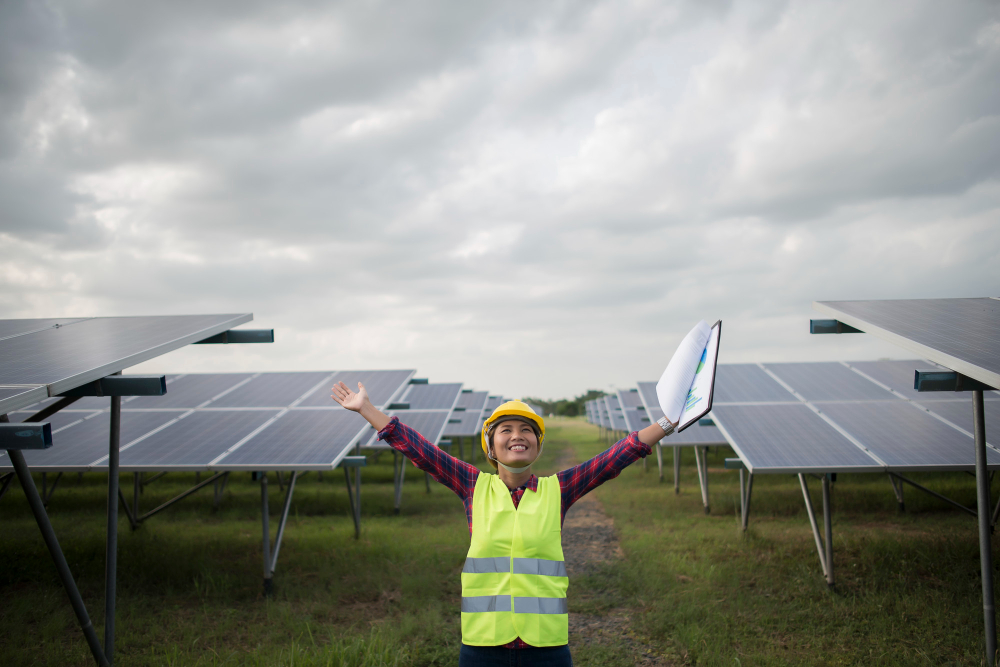
The nation’s first solar-powered live music platform is going to be the GreenFox Energy Breakthrough Stage, a name that evokes both promise and purpose. It won’t function solely on hope. The entire operation will be powered by a carefully designed combination of high-capacity batteries and photovoltaic panels. The sun’s stored generosity keeps everything running smoothly, including the sound, lights, and backstage power.
| Festival Name | Party at the Palace 2025 |
|---|---|
| Location | Bonnytoun Farm, Linlithgow, Scotland |
| Dates | August 2–3, 2025 |
| Attendance | Over 7,000 expected |
| Solar Innovation | GreenFox Energy Breakthrough Stage powered entirely by solar |
| Power Method | Solar panels and pre-charged battery storage |
| Emissions Saved | Approximately 20 kg of CO₂ |
| Energy Generated | Up to 100 kWh of clean energy |
| Key Headliners | Boney M, Squeeze |
| Featured Solar Stage Acts | Laurie Wright, Pistol Daisys, Forgetting the Future |
| Green Incentive | 15% discount on solar installs for ticket holders via GreenFox Energy |
| Official Link | www.greenfoxenergy.com |
This year, the quiet energy flowing through cables is making waves in an area where spectacle and noise typically take center stage.
GreenFox has built a system that will provide up to 100 kilowatt-hours of clean electricity over the weekend by taking advantage of Scotland’s surprisingly productive daylight hours. That might not seem like much at first. However, it’s sufficient to run a normal UK home for ten days without emitting any smoke or fuel.
More concretely, it saves about 20 kilograms of CO₂ emissions, demonstrating that, in the hands of careful engineers and planners, even a small infrastructure change can have a remarkable impact.
GreenFox Energy co-founder Eddie Curran expresses modest pride in the accomplishment, saying, “Festivals are full of energy – and now we’re bringing the renewable kind too.” That sentence’s elegance stuck with me because of its dual meaning and how skillfully it reframed what is possible.
There is more to this than just a green experiment concealed in a side tent. It is a prominent and emphasized aspect of the experience, as tangible as the music itself.
Last year, while strolling around the site, I recall stopping close to a diesel unit that was humming behind a food stand. This year, there will be a noticeable difference—not only will it be quieter, but it will also be cleaner, smarter, and much less invasive.
Boney M and Squeeze are among the well-known acts on this year’s lineup, guaranteeing that the main stage will attract its typical audiences. However, a lot of people will be looking at the GreenFox Energy Stage, where up-and-coming performers like Laurie Wright, Forgetting the Future, and Pistol Daisys will play under solar-powered lights. That younger voices would assist in establishing a newer power seems appropriate.
John Richardson, the festival director, stated unequivocally that this choice was not a show. He declared, “We’re a family festival.” “It’s critical to contribute to building a better future for the following generation.” His voice was natural, as if he were saying something long overdue and obvious.
One could easily write this off as a symbolic gesture. One phase. Just one weekend. A drop in the sea. But when seen in a different light, it’s a very clear blueprint for large-scale change. GreenFox claims that if every festival in the UK adopted even one solar-powered setup, the yearly carbon savings could exceed 12 tonnes. Little efficiencies adding up to a larger environmental chorus is a cumulative force.
In addition to the music, the GreenFox team is providing attendees with a concrete way to become involved in the movement. With a 15% discount on solar installations available to ticket holders, the transition from spectator to participant is surprisingly doable. It’s not a sermon, but a calculated prod.
There is something especially novel about incorporating climate action into such a happy and social event. It is presented as evolution rather than sacrifice or limitation. Here, sustainability is a celebration rather than a reprimand.
Scotland has been edging closer to this time. Green hydrogen was once tried at the Hebridean Celtic Festival, and Glasgow’s attempts to match its music scene with net-zero targets by 2030 demonstrate a wider change in the works. However, this is the first mainstream, mid-sized event to put solar power on par with set lists and sound checks.
The logistics have been improved. Even after sunset, consistent output is guaranteed by the battery systems, which are pre-charged with renewable energy. Neither hybrid hedging nor anxious backups are present. Just a steady, clean stream of energy working in the background.
In the long run, the movement is gaining traction. Policymakers, councils, and business partners will gather at a national solar and storage conference in November to discuss the future. Should the Scottish Government proceed with its suggested requirement that all new public buildings have solar panels by 2026, the cultural industry may serve as a significant testing ground for more extensive energy reforms.
This year’s Party at the Palace fundamentally embodies a spirit of renewal, which many festivals claim to have but few actually do. In addition to the energy flowing through cables, fans, organizers, and artists exchange ideas because they recognize that progress frequently starts in public areas where it is shaped by sunlight and amplified by basslines.
Although Scotland isn’t known for its constant sunshine, maybe that’s why this step feels so important. It demonstrates how creativity and purpose can light up a different kind of stage that is driven by possibilities.