


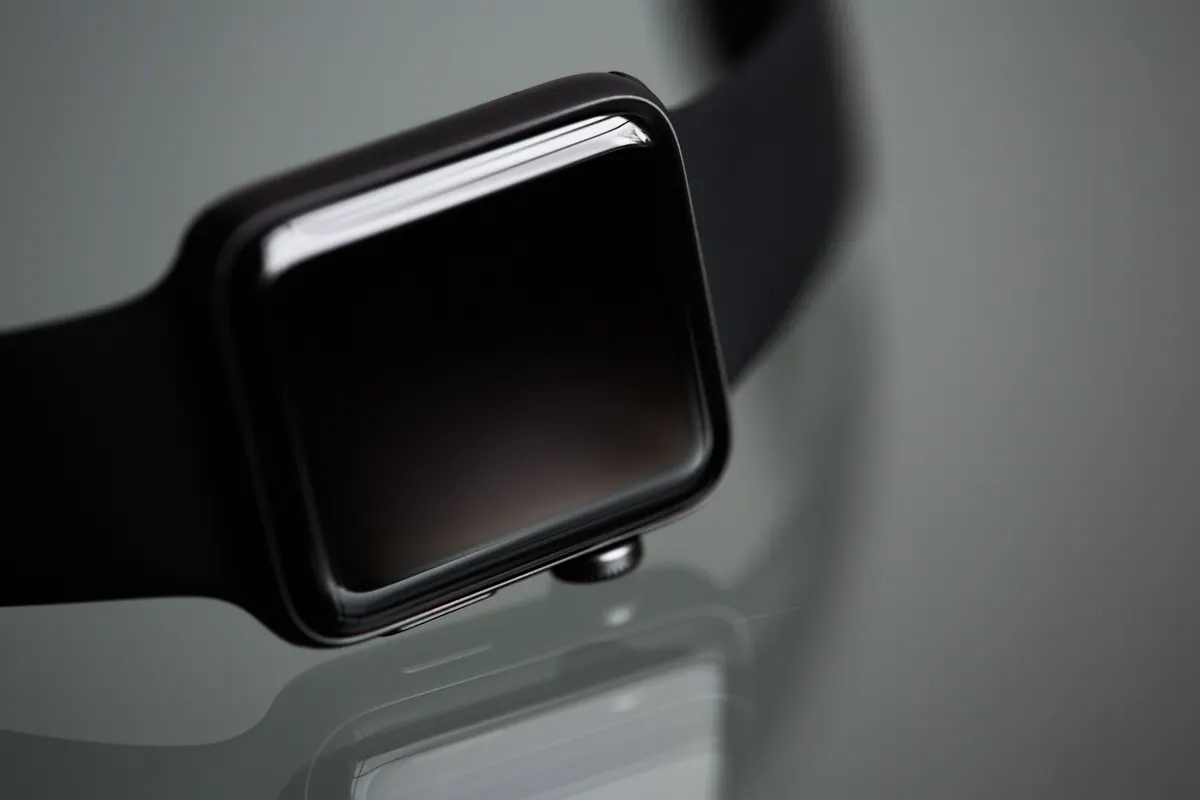
The Pixel Watch 5 new features list is shorter than Google might like to admit, but what’s exclusive to the new model is worth understanding before you decide whether to upgrade. Six hardware and software additions set it apart from the Pixel Watch 4, even if the two watches look almost identical side by side.
Same circular body, same Actua 360 display running at 320 PPI, same maximum brightness of 3,000 nits, same choice of 41mm or 45mm cases. Google has not moved the design on in any obvious way. Several of the headline health features announced alongside the Pixel Watch 5, including Health Guardian, which tracks trends in insulin resistance, blood pressure, and sleep breathing, will land on the Pixel Watch 4 too when they launch. So what, exactly, are you paying for if you go for the new one?
What’s Actually New on the Pixel Watch 5
The centrepiece of the Pixel Watch 5 new features is a chip upgrade: the Qualcomm Snapdragon W5 Gen 2 Accelerated, replacing the standard Snapdragon W5 Gen 2 found in the Watch 4. Google says the new chip processes on-device AI features including the Raise to Talk Gemini interaction and Gemini Intelligence Proactive Suggestions instantly, with low latency, even without an internet connection. The company puts the numbers at 50% more RAM than the previous generation, a 12% CPU boost, and a 20% improvement in overall chip speed.
Here is where things get more nuanced. According to TechTimes, the W5 Gen 2 Accelerated uses the same 4nm, Cortex-A53 architecture as the chip in the Watch 4 and carries no NPU. The headline performance gains are real in Google’s framing, but the underlying silicon is not a generational leap in the way the name might suggest. TechTimes also notes that the Snapdragon W5 Gen 2 includes a Cortex-M55 co-processor, which is the hardware behind always-on sensing, covering heart rate monitoring during sleep, step counting, fall detection, and wake-word listening.
There is also a modest battery bump. TechTimes reports the 41mm model moves from 325 mAh to 332 mAh, while the larger model carries 455 mAh. Not a dramatic change, but an increase nonetheless.
GPS, Sleep, and the Features That Round Out the Pixel Watch 5
Google is making its loudest claims around GPS. The company says the Pixel Watch 5 new features include the most accurate GPS route tracking of any Pixel Watch to date, with double the accuracy of previous generations in what Google describes as the toughest environments. Google goes further and claims it outperforms both Apple Watch Ultra 3 and Garmin Fenix 8 Pro on route precision. To get there, Google says it used Google Maps to trace satellite ray paths through 3D building models, and enabled the watch to connect to weather reference stations globally in real time to account for local atmospheric conditions. Those are bold claims that reviewers will stress-test properly.
Sleep tracking gets a specific hardware advantage too. Google says the Pixel Watch 5 delivers 15% more accurate sleep stage detection than its predecessor. On top of that, the watch can pause audiobooks automatically when you fall asleep, and there is now a dedicated bedtime watch face. The Pixel Watch 4 does not get these particular additions.
Watch face options expand as well. Google says two new faces, named Weave and Chronograph by 9to5Google, come with the Watch 5, along with 11 new complication styles. AI-generated watch faces are also available if nothing in the standard selection suits.
On colours, the Watch 5 adds Fog, Olive, and Canyon, though Canyon is exclusive to the 41mm. The 45mm model has its own exclusive in the form of a Stephen Curry Special Edition, which is not offered in the smaller size.
Finally, there is breathing emergency detection, exclusive to the Pixel Watch 5 and launching in Europe first. Google says the watch uses on-device AI to read its PPG, accelerometer, and barometer sensors simultaneously to detect if you stop breathing, whether from drug toxicity, pneumonia, or choking. If it detects a breathing emergency and you cannot respond, it contacts emergency services and shares your live location automatically.
The breathing emergency detection feature’s EU-first rollout means its wider availability timeline remains unconfirmed for now.