


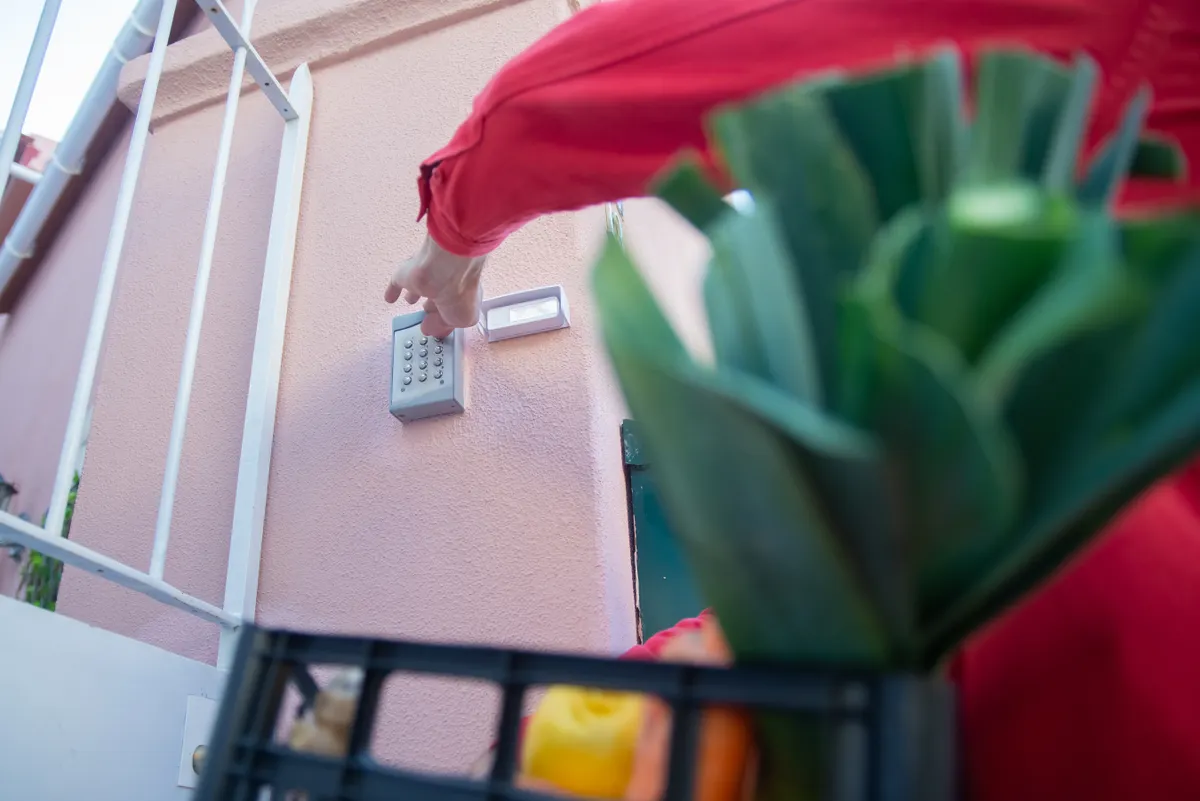
The Ring Smart Lock Power Dial is the headline feature of Ring’s first-ever smart lock, due to land in the first quarter of 2027, and its core idea is straightforward enough that you’ll wonder why nobody did it sooner. If the battery dies completely, you turn a built-in dial on the keypad for a few seconds, generate just enough charge to run the electronics, and the door opens. No spare key, no fake rock in the garden, no locksmith at midnight.
Ring, owned by Amazon, has spent years making video doorbells a household fixture. Smart locks are a different proposition, and according to Ring founder Jamie Siminoff, the company deliberately stayed out of that market for a long time. His reasoning: there was little point adding another near-identical product to a crowded field. What changed his mind was a personal frustration, searching for a lock for his own guest home in a remote location and finding nothing that met a simple brief: something that would work reliably even if nobody had been around to swap the batteries, and that didn’t involve hiding a backup key somewhere and hoping for the best.
How the Ring Smart Lock Power Dial actually works
Siminoff drew the idea from battery-free torches that generate power through friction when you crank them. The Power Dial works on the same principle: it sits directly on the lock’s keypad, and rotating it back and forth for a few seconds generates enough energy to run the lock’s electronics and release the bolt. Once there’s charge, the lock behaves like any other smart lock, you can open it with a numerical code, a fingerprint, the Ring app, or an Alexa voice request.
The fingerprint reader and backlit touchscreen keypad are worth dwelling on. According to The Verge, the lock supports multiple users, with the option to schedule when each person has access, useful if you rent out a room or want to give a tradesperson entry only during a specific window. There’s also the ability to create temporary access codes that expire automatically after a set time, which removes the hassle of remembering to revoke access manually after the fact.
Siminoff told the preview that the Power Dial is designed to ‘get rid of [the need for a] backup key without the anxiety.’ He also pointed out that, given how much technology has moved on (he mentioned being able to start his Tesla from his phone) it is, in his words, ‘insane that we still use keys [to enter our homes].’ Pin tumbler locks have remained largely unchanged for close to 200 years. Ditching the keyhole entirely also has a secondary benefit: no keyhole means nothing to pick.
Price, finishes and what else Ring is releasing
Despite the novel mechanism, the Ring Smart Lock will be priced at $249, in line with the upper end of the existing smart lock market, according to The Verge. It will come in three finishes: black, silver, and brass. No exact release date has been set, though Ring has said it will arrive in the first quarter of 2027 after receiving FCC approval.
Alongside the lock, Ring has announced a new range of security cameras. Four new indoor and outdoor 4K models are going on sale now, with the company citing improved viewing angles, better low-light recording, and options including true 360-degree panning and 175-degree tilt. Prices run from $70 to $220, with some models available for preorder.
The cameras are available through Amazon now. The lock, with its Power Dial and the rest of its access features, follows in early 2027 once regulatory clearance comes through.