


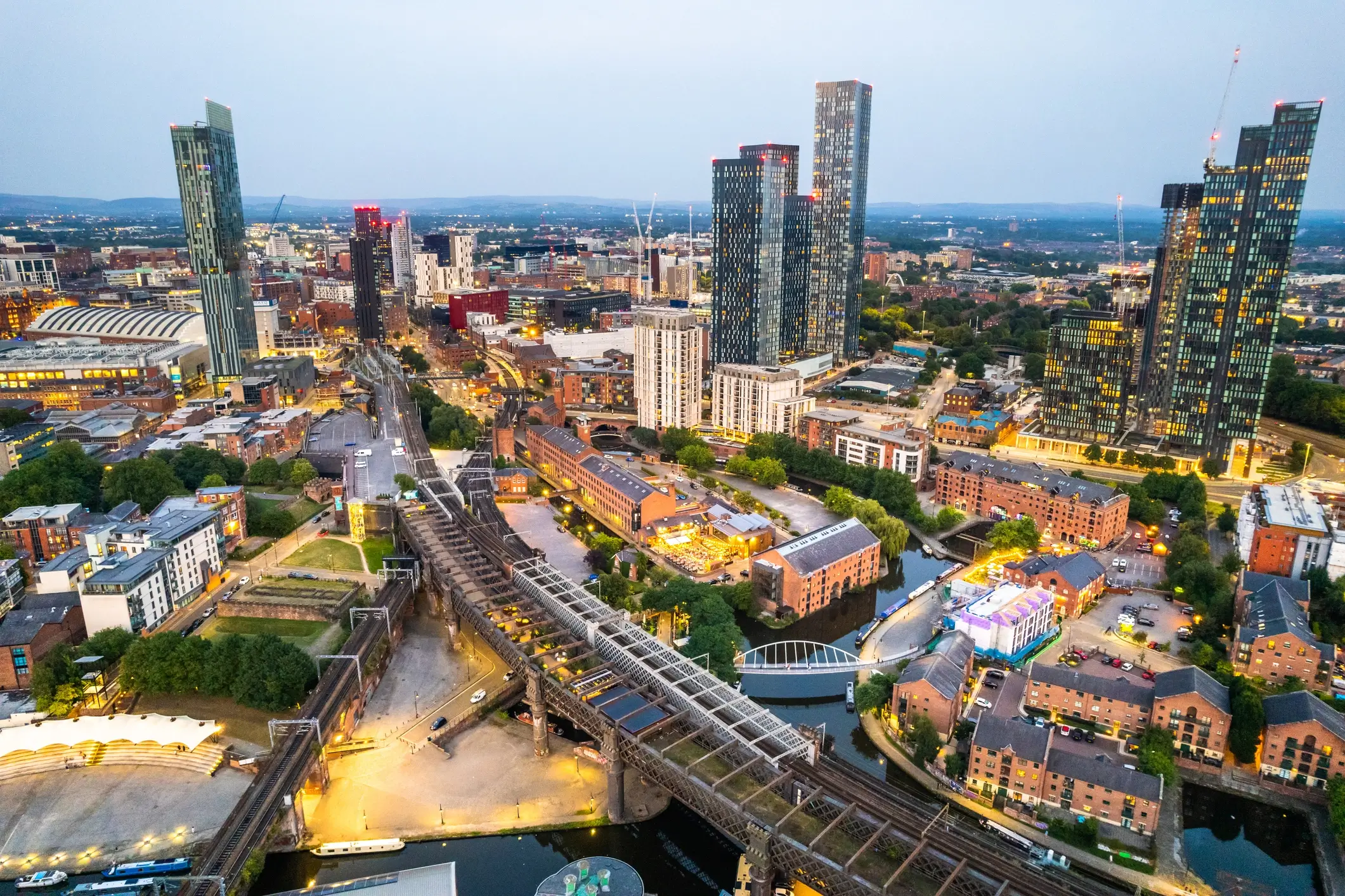
On a cool, damp morning in Manchester city centre, I watched three executives from a European tech firm spill coffee on the pavement outside their new office, laughing about finding a good espresso in a place that wasn’t London. They’d moved their UK headquarters here six months earlier and kept saying the same thing: “We wish we’d done this sooner.” What’s striking isn’t just the volume of businesses moving — it’s the way their reasons zip together like train routes radiating out of Piccadilly Station.
Manchester’s economic headline over the past decade has been growth — real, measurable, and sustained. From 2015 to 2023, the Greater Manchester economy expanded faster than any other major area in the UK, pushing past £100 billion in total value and increasing its share of national output. Some executives talk about that statistic with a raised eyebrow; others simply shrug and say, “You can feel it.” This isn’t just about numbers on a spreadsheet. It’s about a sense of momentum that ripples into boardrooms, recruitment plans, and long‑term strategy documents.
Firms relocating to Manchester, or simply expanding here, often point first to talent. The city-region’s universities graduate thousands of skilled young professionals every year in disciplines like digital technology, engineering, finance, and life sciences. Companies like Auto Trader and Zopa Bank explicitly cited access to this deep, diverse labour market when announcing major office expansions. Their leaders talk about recruitment pools that are both large and locally rooted — meaning newly hired staff aren’t commuting from dozens of miles away or fleeing to bigger cities after a couple of years.
But there are other, subtler forces at work too. I remember interviewing a logistics executive who spoke with slightly uneven breath about their new facility in Trafford Park. They’d spent years at a smaller regional office, constrained by space and infrastructure limitations. The Manchester move tripled their operational footprint and unlocked logistics technologies they’d only dreamed of deploying back home. Small wonder companies with growth ambitions talk about Manchester like it’s a launchpad, not merely a new postcode.
Local policymakers and development agencies have played a part, though perhaps not in the way critics imagine. There’s no magical tax break folder waved at each CEO who lands here, but there is a deeply proactive inward investment setup — a team that offers tailored advice and helps navigate the relocation process. That practical support means businesses don’t feel alone when they make decisions that affect hundreds of jobs and significant capital expenditure. I’ve seen a CEO exhale — a tiny, reluctant little thing — when she was told help was available to make sense of all the permits, leases, and long‑term planning issues that relocation entails.
Public infrastructure matters too. Manchester is investing in transport connectivity, digital infrastructure like full‑fibre networks, and integrated planning that brings housing, jobs, and services into closer alignment. For businesses, that means employees can realistically live near where they work, schools and services are easier to reach, and travel times — even to London — are coming down as high‑speed rail arrives. Companies planning expansion don’t want to guess about future connectivity; they want evidence, and Manchester is starting to provide that.
There’s also a cultural side to the relocation story — something harder to quantify but palpable if you spend a few days in the city’s business districts. Districts like NOMA, Circle Square, and MediaCity in Salford have become vibrant clusters where tech, creative media, and professional services mingle. Firms are moving not just into office blocks but into communities where collaboration feels natural. A financial services company executive once described it to me as “a place where ideas bounce off each other because people actually bump into each other in corridors and cafes.”
Cluster effects matter enormously. Manchester’s life sciences scene, for instance, has drawn more research‑intensive companies because of the combination of university partnerships, accessible space, and a visible peer community. Where once a firm might have felt isolated starting out, now there’s an ecosystem that makes expansion feel less risky and more strategic. Investors notice this too, and their confidence feeds back into the cycle of relocation and growth.
For some global players, Manchester’s appeal is also practical in the simplest sense: cost. Office space here, while rising, still compares favourably with London’s prices. That difference is meaningful when a firm is planning expansion rather than temporary occupancy. Beyond office rents, living costs for employees — from rental apartments to public transport — tend to be lower than in the UK capital. These factors don’t just change balance‑sheet projections; they affect real lives and decisions.
Yet not all relocations are triumphant. There are stories of employees struggling with change, commuting challenges, and occasional cultural mismatch — reminders that relocation isn’t simply a corporate upgrade. Relocation decisions can ripple into personal lives in ways executives don’t always foresee. I’ve sat with people unpacking laptops and cardboard boxes in what’s supposed to be a moment of expansion, but the air carries a fragile mix of excitement and unease that lingers longer than any press release would suggest.
Part of Manchester’s growing magnetism is that it offers both stability and opportunity. Its economy isn’t monolithic; it spans digital, financial, creative, and life sciences sectors, which spreads risk and invites varied kinds of expansion. Businesses with diverse portfolios feel more comfortable here because a downturn in one sector doesn’t mean a total loss of local momentum. In Manchester, they sense resilience.
And underlying many of these outward indicators is a surprising sentiment among business leaders: admiration, even for the place itself. A chief executive of a midsize tech company once paused mid‑sentence when describing the city’s appeal and said, quietly, “There’s a confidence here I didn’t expect.” That moment — unguarded, reflective — stuck with me because it summed up, more than any statistic, what relocation to Manchester feels like from the inside.
Manchester’s pull isn’t a trend. It’s a convergence of strategy, talent, geography, infrastructure, and culture. It’s also the product of choices — by firms, by local leaders, and by workers who are willing to take a chance on somewhere that once sat in the shadow of London’s dominance. Now, more companies are choosing Manchester as the place to grow, build, and expand. And that choice is reshaping not just boardrooms, but the very character of the city and its wider region.