


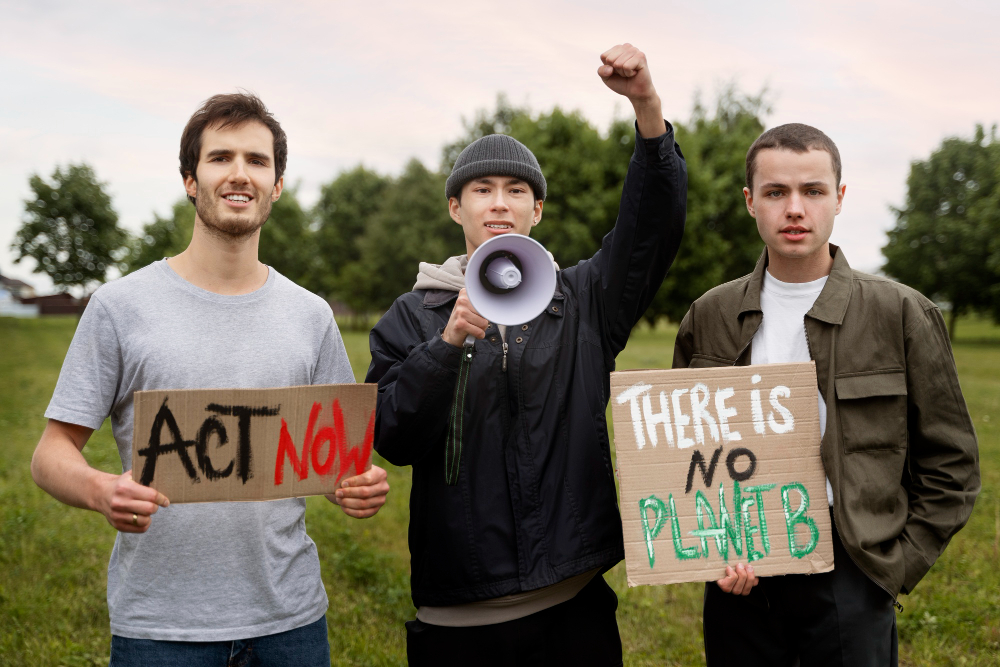
The rain felt more abrasive than anticipated. With boots pounding against puddles and flags twisted by the weather, crowds slowly gathered near Westminster. Masks were worn for anonymity as well as health reasons. A few people covered their faces from the CCTV. There was another reason why she did it.
She was defending her father’s employment. Her words were purposeful, and her sign was little. “Save Lives, Change Power.” kept just inside her jacket till the cameras moved on to another location. The majority of protesters were unaware of her father’s title. That’s how she wanted it to remain. Underneath every march she participated in, being the daughter of the Police Commissioner was more than just a footnote.
| Feature | Detail |
|---|---|
| Subject | A protester whose father holds the position of Police Commissioner |
| Key Conflict | Loyalty to public justice vs personal family duty |
| Protest Themes | Police accountability, civil rights, community reform |
| Parental Role | High-ranking police official tasked with overseeing law enforcement |
| Emotional Tension | Internal conflict, reputational risk, ethical dissonance |
| Core Question | Can you protest authority when your father embodies it? |
| Country Context | United Kingdom, amid ongoing scrutiny of policing methods |
She saw protests as a commitment to honesty rather than a response to rage. She marched because she supported justice that wasn’t performative and fairness. From inside its topmost offices, she had a better view of the system than most people. Clipped radio chatter, glowing praise, and the meticulous routines of a man who takes his job very seriously had filled her home.
She remained standing on the opposite side of the barricades.
That inconsistency wore her out on some days. Her dad wasn’t a bad guy. He had a deep commitment to public safety and was courteous and moral. Throughout his career, he worked to safeguard communities that were under risk. However, there were deadly blind spots in the system he worked for. Even well-intentioned quiet has turned into complicity.
Police has entered a period of intense introspection in recent years. More misconduct cases made it to the front pages. Too much was recorded by body cams. I apologized softly. Once-powerful departments were being asked to explain rather than merely enforce. That shift was really important to her.
Her first protest seemed less like a cause and more like a confession. She hesitated, looking around the streets for familiarity rather than danger. A friend of the family? A senior officer? The prospect of being spotted made her skin tremble. It would be a tale before dusk if anyone knew who she was.
She was not only running the possibility of conflict by taking part, but she was also confronting her own image in the badge her father wore every day.
She once received a candle from a stranger at a vigil for a young man who had passed away while in detention. They stood silently while the flame flitted in the wind. No speeches. Only time and names. It dawned on her then that shouting isn’t always the best method to protest. At times, it entails remaining motionless and not turning away.
Talking to her father at home was delicate. They discussed the tremendous pressure officers confront, mental health response teams, and laws. Although he adhered strictly to structure, he did not discount her opinions. “Change must originate internally,” he would say cautiously. “And from outside, pressing inward,” she said, agreeing.
The distinction between them was that.
She was impressed by his sense of accountability. He had a strong belief in the power of empathy-driven policing. However, she was also aware that in reality, policies frequently did not safeguard lives as written. Reform was more than just a tactic; it was a demand molded by tragedies and tales too widespread to be disregarded.
She told me about a calm moment she had while sitting on the steps, still wearing her coat, late at night after a demonstration. Her father entered, stopped, and remained silent. He didn’t inquire about her whereabouts. didn’t give a lecture. just placed a tea cup next to her on the step. Neither one said anything. But there was more than tension in the silence. It was also respectful.
I thought about that little detail for days.
She gained the ability to live in uncertainty as a result of these encounters. Not everything needed to be resolved. Her quest for systemic change and her love for her father were not mutually exclusive. They were genuinely, yet sensitively, attached. She believed that the most significant change emphasized the example of those who served with care rather than erasing them.
Her attendance at demonstrations shifted the focus from resistance to accountability. She never yelled catchphrases that she couldn’t define. Social media was never her cause. Every action was deliberate and well-thought-out. She saw protest as a kind of civic upkeep rather than a show.
She did not wish for devastation. It was redesigned. a time in the future when authority could be relied upon. where groups were heard before being hunted. where demonstrators could express themselves without worrying about reprisals and police officers could proudly carry out their duties.
Despite its ambition, such goal was not insurmountable. Hope was given by particularly creative policy changes, such as trauma-informed training and community review boards. Programs that emphasized restorative justice and de-escalation also did. She kept a careful eye on them in the hopes that her father’s department would eventually adopt them more forcefully.
She wasn’t betraying him when she pushed for those reforms. In actuality, she was upholding the morals he instilled in her: bravery, justice, and doing the right thing even when it is difficult.
The load is tremendous when you are carrying a protest sign and a last name that the officers lined the path are familiar with. However, it also helps you become more aware of what is important. You learn to talk clearly while moving cautiously.
I once heard her say, “It’s not about picking sides. It’s about deciding to be honest. She spoke steadily and without defensiveness. She didn’t recoil.
And when it is motivated by the belief that things can and should improve, particularly for the benefit of those who still believe in justice on both sides of the border, that is, in my opinion, the most potent form of protest.