


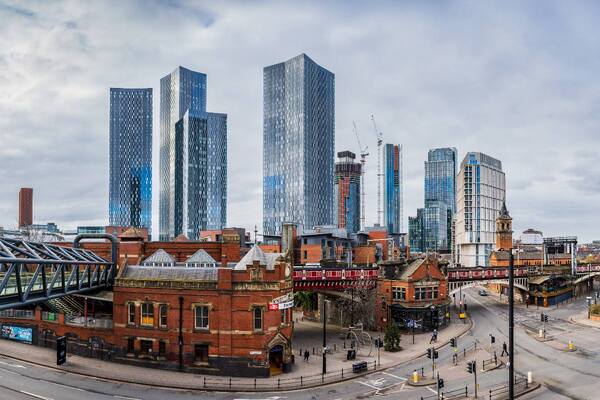
The change did not announce itself with banners or slogans. It crept in through repurposed warehouses, half-filled co-working floors, and coffee shops where laptops outnumbered notebooks. Manchester’s startup ecosystem has grown through accumulation rather than spectacle, shaped by repetition and patience more than sudden breakthroughs.
On weekday mornings in the Northern Quarter, it is common to overhear conversations that drift between funding rounds and broadband speeds. These are not the loud declarations of ambition that once characterised startup culture elsewhere. They are practical exchanges, grounded in rent costs, hiring realities, and whether a product actually solves something. That restraint has become part of the city’s appeal.
Manchester has always carried an industrial memory. Cotton mills, canals, and railways left behind a physical infrastructure that now lends itself to reinvention. Old factories become studios. Former offices become shared workspaces. The city understands transition because it has lived through it before, and that familiarity with change has translated into a tolerance for risk that feels measured rather than reckless.
Universities play a quieter but decisive role. Research does not sit isolated here; it spills outward. Graduates stay. Academics consult. Spinouts form not because it is fashionable, but because there is support to do so without immediately relocating south. The steady flow of talent keeps ideas circulating and prevents stagnation.
Innovation hubs across the city have avoided the trap of becoming performative. They are functional places, often imperfect, sometimes underfunded, but busy. Startups sit next to charities, scale-ups next to freelancers. The mix creates friction, and occasionally frustration, but also unexpected collaboration. Manchester’s strength lies in proximity rather than polish.
There is also a financial realism that shapes decision-making. Early-stage founders talk openly about burn rates and survival, not just valuation. Investors here tend to ask fewer theatrical questions and more uncomfortable ones. How will this make money. Who actually needs it. What happens if growth slows. That tone influences the kinds of businesses that survive.
The city’s transport links matter more than marketing brochures admit. Being able to reach London quickly without living there changes the calculation for many founders. Clients remain accessible. Costs remain contained. The balance is imperfect, but workable. Manchester benefits from proximity without dependency.
Local government involvement has been uneven, sometimes frustrating, but generally pragmatic. Regeneration projects do not always align with startup needs, yet they improve the texture of the city in ways that matter indirectly. Better public spaces, improved digital infrastructure, and visible long-term planning create confidence, even when policies lag behind ambition.
I once sat in a converted mill watching three founders debate whether to hire locally or remotely, and the seriousness of the discussion surprised me more than the answer they reached.
The Manchester startup ecosystem also benefits from its refusal to specialise too narrowly. While clusters exist, there is no single dominant narrative. Fintech coexists with health technology. Creative agencies sit beside data firms. This diversity reduces vulnerability. When one sector tightens, others absorb the shock.
There is a noticeable absence of performative hustle. Late nights happen, but they are not worn as badges. Burnout is discussed without irony. The city’s pace encourages sustainability, even when ambition runs high. That balance attracts founders who want to build companies, not just stories about companies.
Funding has become more accessible, though not abundant. Seed rounds are competitive, and later-stage investment still often pulls companies toward London or overseas. Yet Manchester has developed a stronger middle layer of support: angel networks, regional funds, and patient capital willing to wait beyond the next quarter. That patience shapes business behaviour.
Failure, too, is treated differently here. A startup closing does not exile its founder. People resurface quickly, hired into other teams or starting again with fewer illusions. The ecosystem remembers effort, not just success. That memory matters.
Innovation hubs have increasingly focused on practical support rather than spectacle. Workshops on compliance draw bigger crowds than inspirational talks. Founders want templates, not slogans. Manchester responds well to that preference, perhaps because the city has little interest in pretending work is glamorous.
The role of large employers should not be underestimated. Established companies provide both talent and cautionary tales. Employees leave with skills and return with experience. Startups learn what bureaucracy looks like and try to avoid replicating it too early. The relationship is symbiotic, occasionally tense, but productive.
Manchester’s cultural identity also feeds into its business life. There is pride without arrogance. Confidence tempered by memory. The city has been overlooked before, and that history sharpens its focus. Growth is pursued, but not at the cost of coherence.
Digital infrastructure has improved unevenly, yet enough to sustain growth. Remote work did not hollow the city out; it expanded its reach. Manchester-based teams now hire nationally and internationally while remaining rooted locally. Offices become anchors rather than obligations.
Community remains one of the least discussed advantages. Introductions happen easily. Advice is shared without expectation of return. This is not altruism; it is recognition that ecosystems survive through reciprocity. Manchester understands that instinctively.
The city’s startup story is not one of sudden dominance. It is one of accumulation, adjustment, and endurance. Innovation hubs continue to fill and refill. The Manchester startup ecosystem grows not by declaring itself exceptional, but by doing the work repeatedly, learning publicly, and staying put long enough for momentum to matter.