


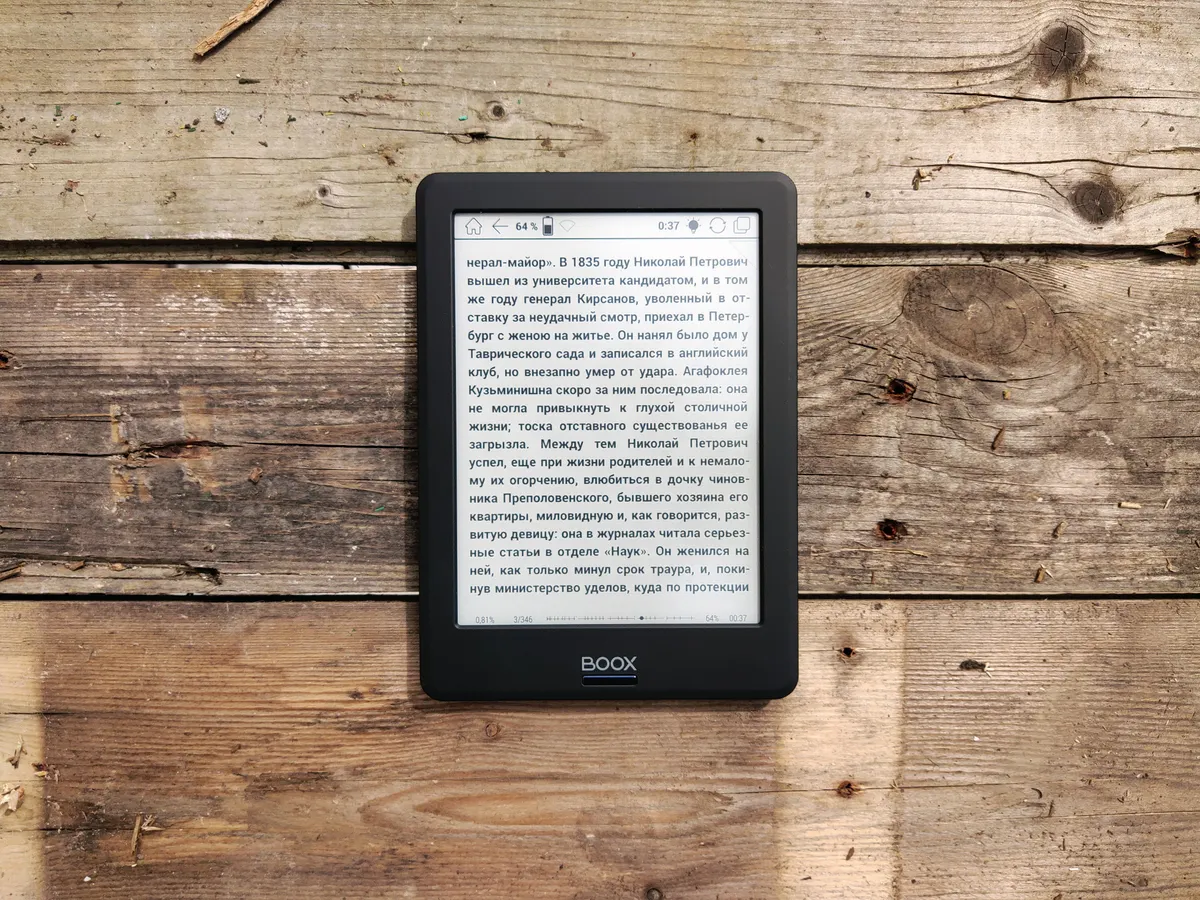
The Boox Picco tiny e-reader is Boox’s answer to the wave of micro-readers that has been quietly reshaping the market, and it arrives with a handful of genuine advantages over its closest rivals. At $99 and 3.97 inches, it sits squarely in the same pocket as the Xteink X4 Pro (same price, similar dimensions, same screen resolution) but the differences in how it is built and what it runs are worth paying attention to.
What Makes the Boox Picco Tiny E-Reader Different
On paper, the similarities between all these micro-readers are almost comical. Every screen in this category comes from the same manufacturer, E-Ink, which means the Picco, the Xteink X4, the X3, and the X4 Pro all share an identical 480×800 resolution panel. They all run on ESP32-based processors. They all ditch internal storage in favour of a microSD slot. If you lined them up on a table, you might struggle to tell them apart at a glance.
Get closer, though, and the Picco starts to distinguish itself. The build feels more refined: a two-toned back panel, an aluminium frame, and buttons that apparently recall the iPhone 5. It weighs 58g against the X4 Pro’s 72g, which is either appealingly featherlight or slightly insubstantial depending on your preferences. Most of that weight difference comes down to the absence of internal magnets (the Picco cannot snap to the back of a phone) but given that the magnetic-attachment gimmick was always more marketing than practicality, that is probably no great loss.
One area where Boox has made a clear, sensible call: the Picco charges and transfers files over a standard USB-C port. Xteink has moved away from USB-C across its current lineup, opting instead for magnetic pogo pins that require a separate cable or an adapter. Battery life on devices like these is measured in weeks, so charging frequency is rarely the issue, but plenty of people care about not needing a proprietary cable, and Boox has given them what they want.
Linux Under the Hood, CrossPoint on the Surface
The firmware story is where things get genuinely interesting. According to Notebookcheck, the Boox Picco runs a simplified Linux-based operating system built specifically for reading, not the full Android platform that powers Boox’s other devices such as the Palma. That is a departure from what many expected, and it shapes the whole experience.
In practice, the Picco ships running a modified version of CrossPoint, the custom firmware originally developed by Xteink fans to fix the shortcomings of Xteink’s own native software. CrossPoint has become something of a community standard in this corner of the e-reader world, and getting a polished variant of it out of the box, rather than having to flash the device yourself, makes the Picco immediately more accessible. Out of the box it handles book display well, includes dark mode, allows the touchscreen to be disabled entirely, and lets you load files via wifi from a connected smartphone, by plugging into a computer as a USB drive, or through the forthcoming BooxTile cloud app.
There are limits. Bluetooth is present in the hardware but the current firmware offers no menu options for it, meaning peripherals like the Boox Tappy remote page turner cannot yet be connected. The button layout has drawn some early criticism too, a single right-side rocker replaces the opposing forward/back buttons found on the Xteink X3 and X4 Pro, and it is small enough to occasionally cause mis-presses. A physical switch on the left side offers manual control of the front light, which is a neat touch. The front light itself is temperature-adjustable, as on the X4 Pro.
One practical note on ergonomics: the Picco’s straighter edges are less immediately comfortable to hold than the slightly rounder Xteink devices. Smaller than the 4.3-inch X4 Pro and larger than the 3.7-inch X3, it sits at 5.5mm thick (between both rivals) and will disappear into any jacket pocket without complaint.
When Can You Buy One?
Not yet, as it stands. The Picco is not available for pre-order through Boox or any retailer at the time of writing. Notebookcheck reports that a worldwide release is expected in November 2026. If you cannot wait, the Xteink X4 Pro is available now on Amazon at the same $99 price point, about $50 less than an entry-level Kindle.
The Picco’s Linux foundation means it will very likely be flashable with custom software once the community gets hold of it, which should give buyers even more options down the line. For now, November is the date to watch.